
The Core Science Fiction Shelf
Science fiction is often described as a literature of the future, but its greatest works are rarely about prediction alone. At its best, the genre becomes a way of examining power, identity, belief, memory, and the fragile systems that shape human life — by viewing them from a slight distance. The books gathered here span philosophical classics, modern literary science fiction, strange and singular visions, and works of immense imaginative scope. Together, they form a shelf not of definitive “best books,” but of enduring ones: stories that reward re-reading, deepen with time, and continue to expand the boundaries of what science fiction can be.
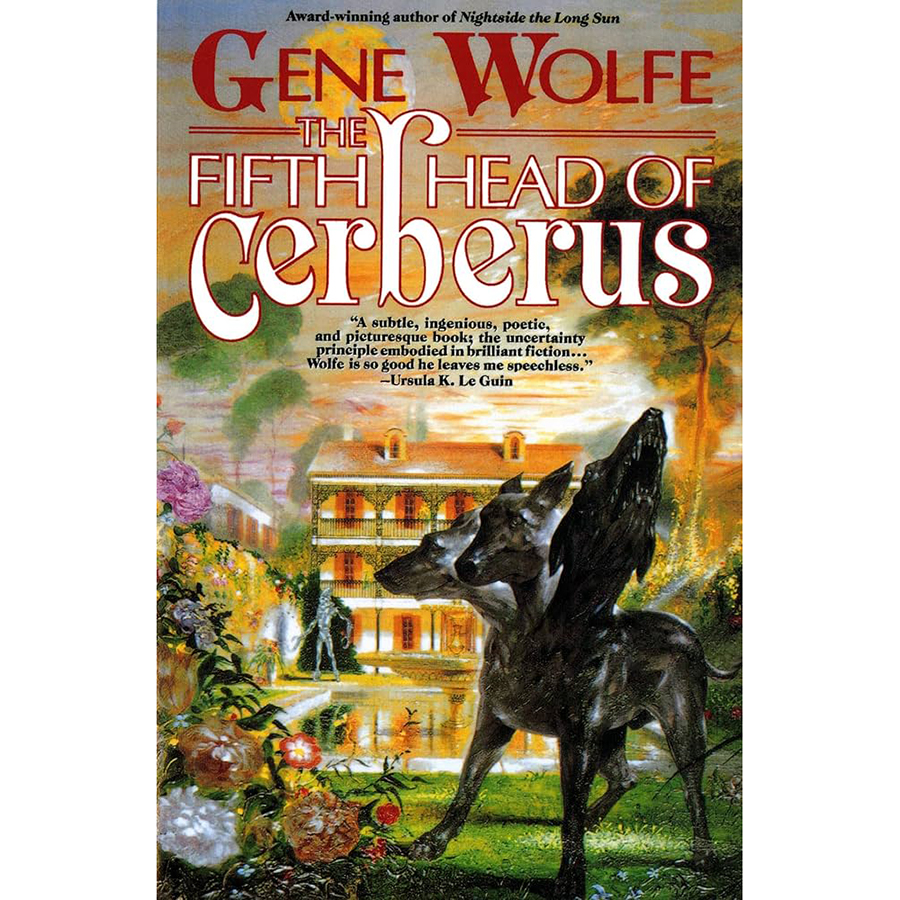

The Fifth Head Of Cerberus, Gene Wolfe
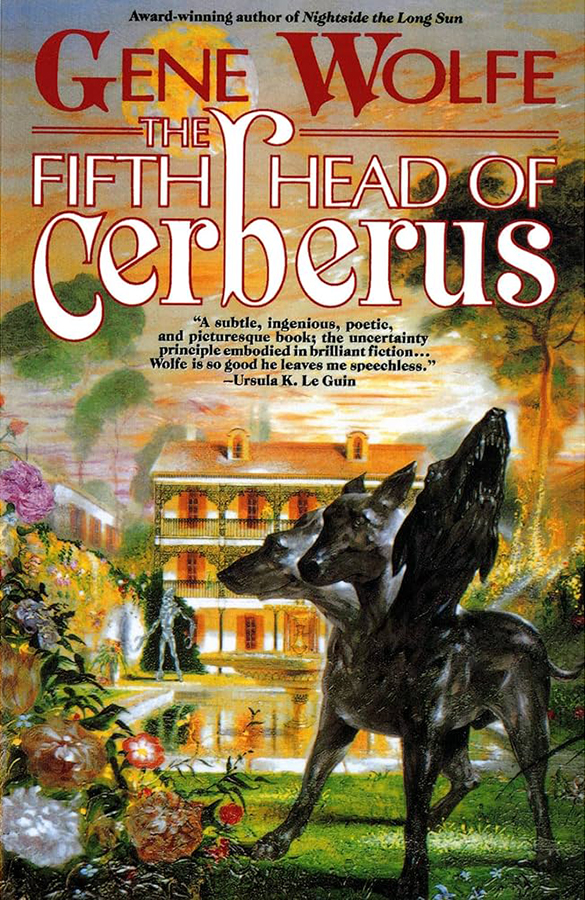
A dense, layered work of identity, memory, and colonial inheritance, The Fifth Head of Cerberus rewards the kind of close reading few books can sustain. Across its trio of interconnected novellas, Wolfe constructs a world where the legacy of colonization has seeped into every aspect of life on the twin planets of Sainte Anne and Sainte Croix—shaping their histories, their myths, and even the nature of the people who inhabit them.
In the opening section, a young man raised in a brothel‑laboratory slowly uncovers the disturbing truth of his own origins; in the second, an anthropologist’s field report unravels into a hallucinatory account of a culture that may be imitating—or replacing—its observers. And in the third, a prisoner’s tale of escape becomes a metafictional mirror that refracts the mysteries of the first two. Questions of selfhood, imitation, and cultural erasure echo through each narrative, contorting one another in ways that make certainty impossible.
Wolfe’s great trick is that the deeper you read, the more the ground shifts: every revelation opens onto a new ambiguity, every apparent truth contains its own shadow. That slipperiness isn’t a puzzle to be solved so much as the point—an exploration of how stories, memories, and identities are constructed, contested, and overwritten. Strange, unsettling, and endlessly interpretable, it remains one of science fiction’s great literary achievements, and a defining example of how the genre can illuminate the hidden structures of power and perception by bending reality just a few degrees off center.
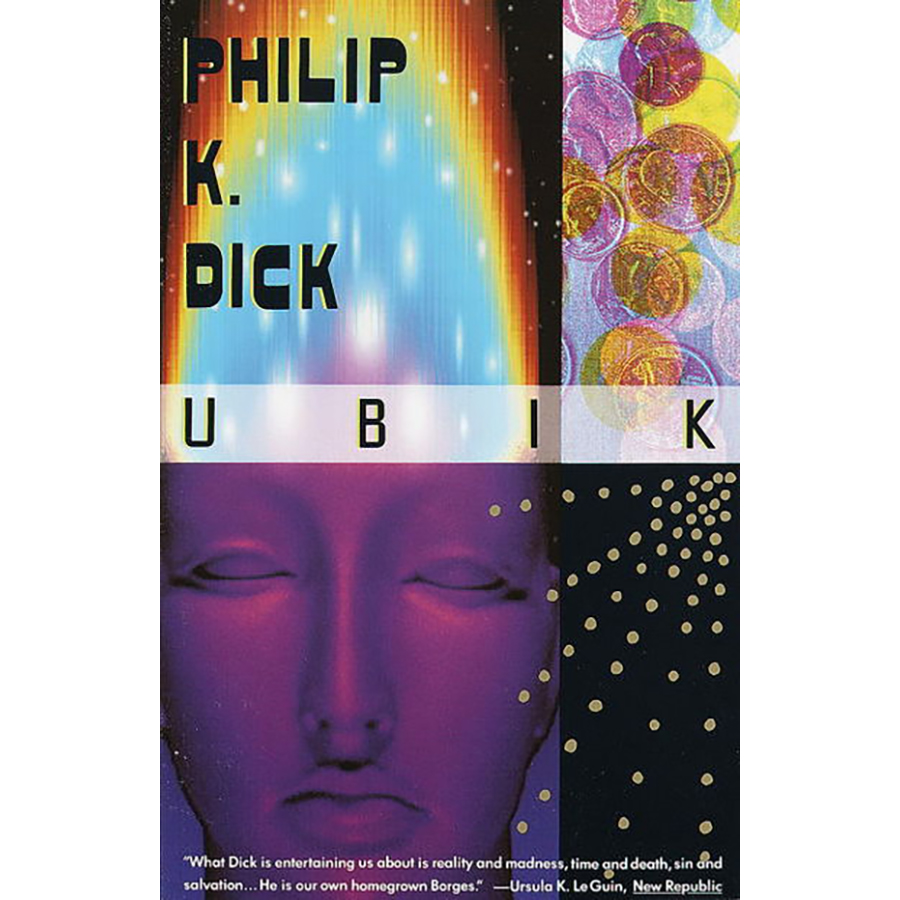
Ubik, Philip K. Dick
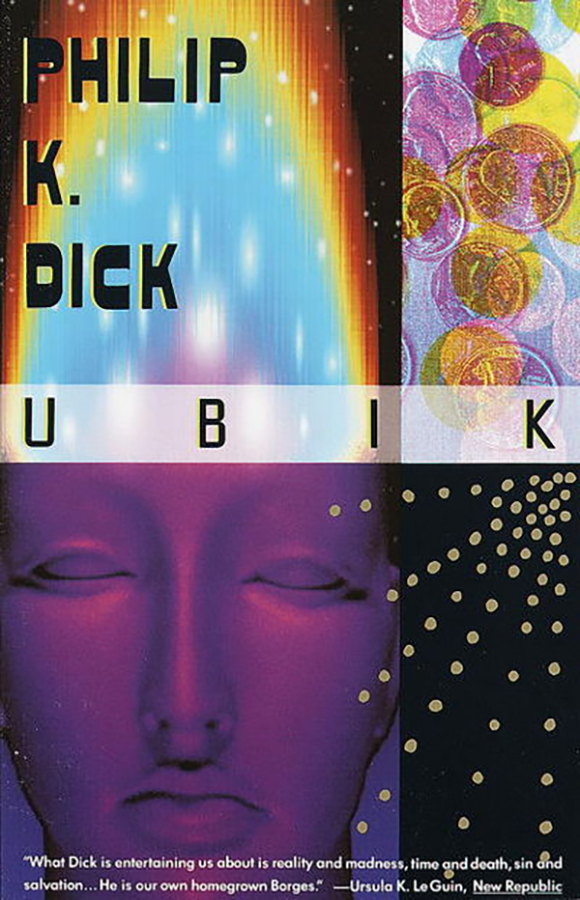
Ubik begins with a familiar Philip K. Dick question—what is real?—and then proceeds to dismantle every certainty the reader thinks they possess. What starts as a corporate espionage mission involving psychic warfare quickly fractures when an explosion leaves a team of anti‑telepaths trapped in a liminal state between life and death, their world regressing into earlier decades as time itself begins to rot around them. As their surroundings decay and messages from the supposedly dead Joe Chip’s employer appear in the most mundane objects, the group is forced to confront the possibility that they are caught inside someone else’s dying consciousness—and that the mysterious product called Ubik may be the only thing holding their reality together.
Reality slips, time decays, and the ordinary becomes quietly terrifying. Beneath its surreal surface lies a deeply human anxiety about mortality, instability, and the fragile structures we depend on to make sense of the world. Dick’s genius is to make that instability feel both cosmic and intimate: a metaphysical thriller wrapped around the fear that the ground beneath us—memory, identity, even the flow of time—can give way without warning. Endlessly strange, darkly funny, and philosophically disorienting, Ubik endures because it captures the vertigo of living in a world where nothing stays solid for long.
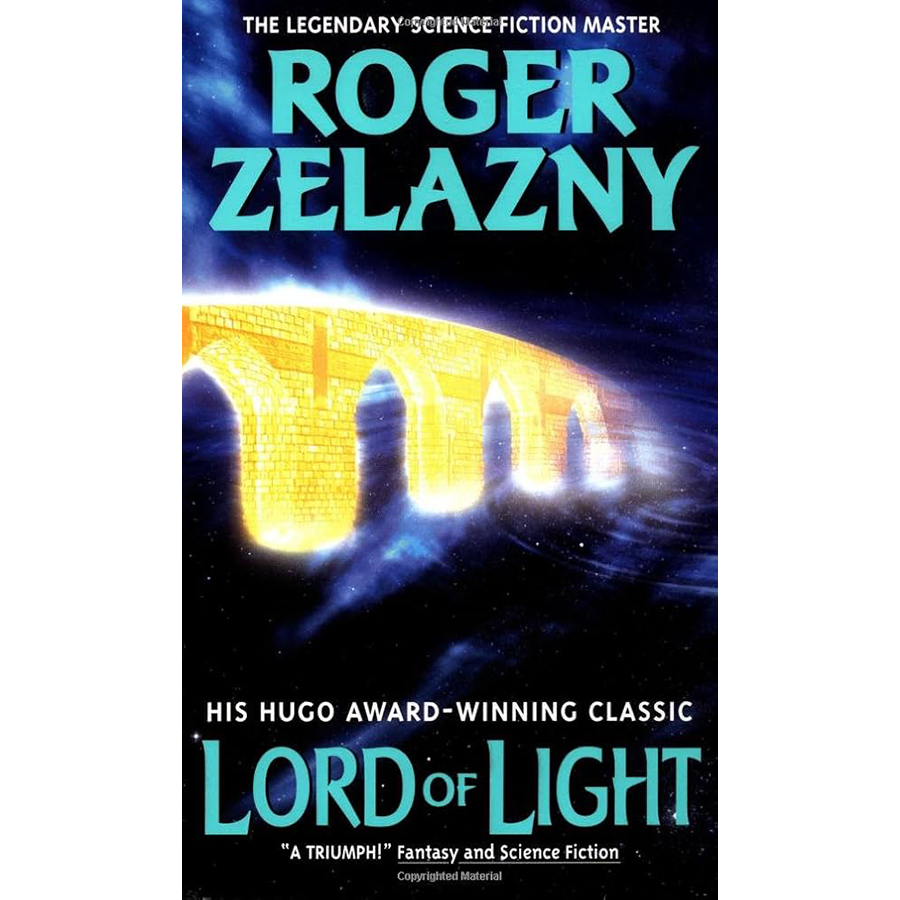
Lord Of Light, Roger Zelazny
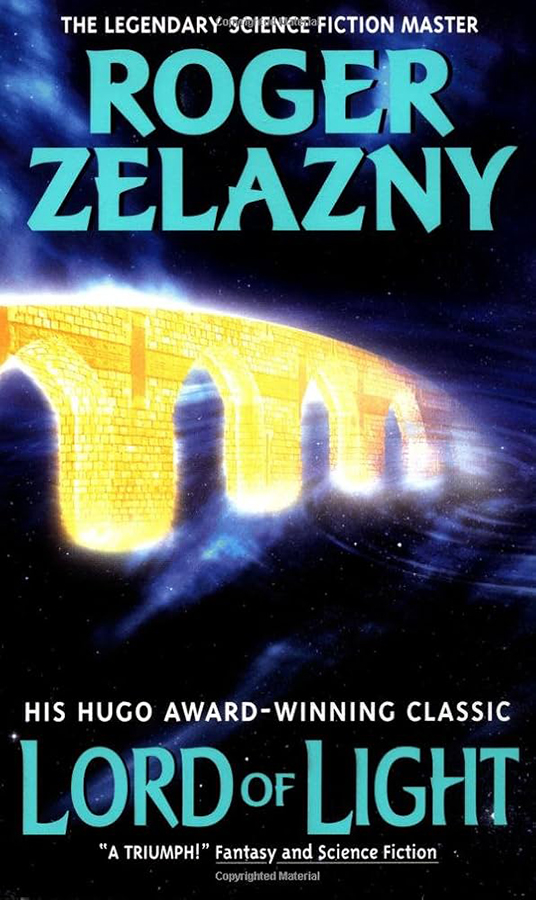
Part science fiction, part mythological epic, Lord of Light fuses advanced technology with the language and structure of legend. Zelazny’s prose is elegant and luminous, balancing philosophical weight with wit, beauty, and momentum. On a distant colony world where the ruling elite have adopted the identities and powers of Hindu deities, the renegade Sam—once the Buddha, once a god himself—sets out to challenge their divine order through rebellion, reincarnation, and the subversive force of enlightenment. As Sam’s struggle unfolds across shifting eras and retold histories, the novel becomes a meditation on power, belief, and the stories that civilizations use to justify themselves.
Few books move so effortlessly between the intimate and the mythic while remaining unmistakably human at their core. Zelazny uses the trappings of divinity not to elevate his characters beyond reach, but to reveal how fragile and contingent even “gods” become when memory, technology, and ideology intertwine. Enduring, inventive, and singular in tone, Lord of Light stands as one of science fiction’s great feats of imaginative world‑building—an exploration of how myth can be both a prison and a path to liberation.
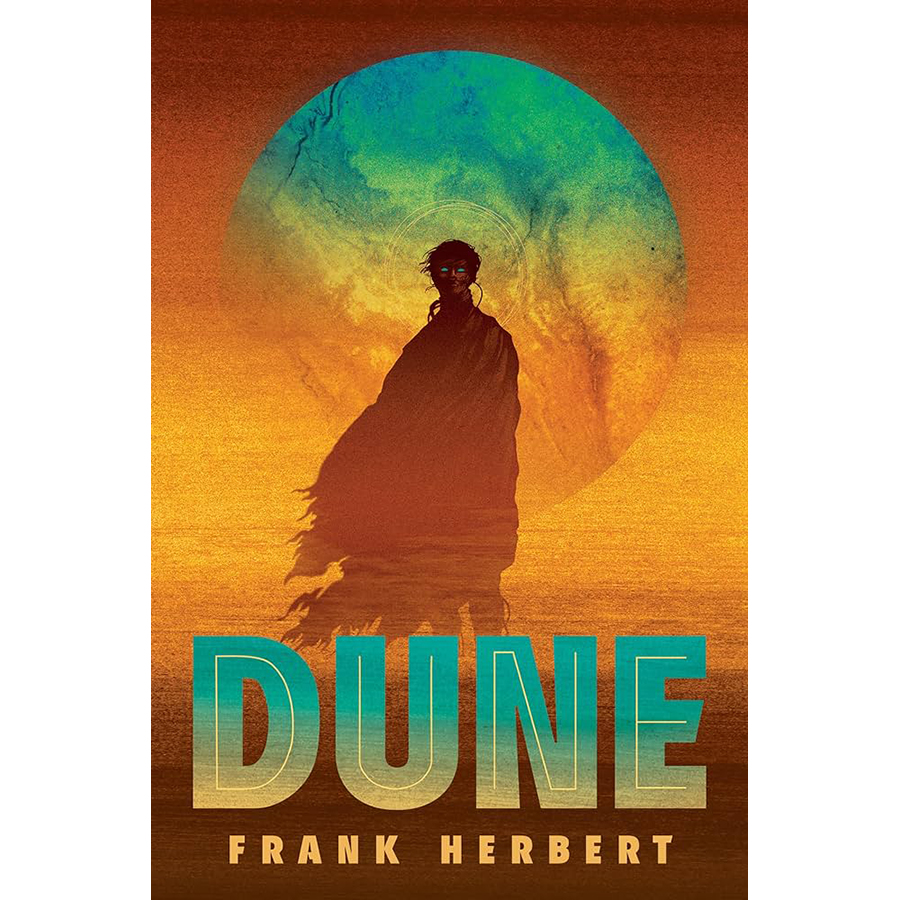
Dune, Frank Herbert
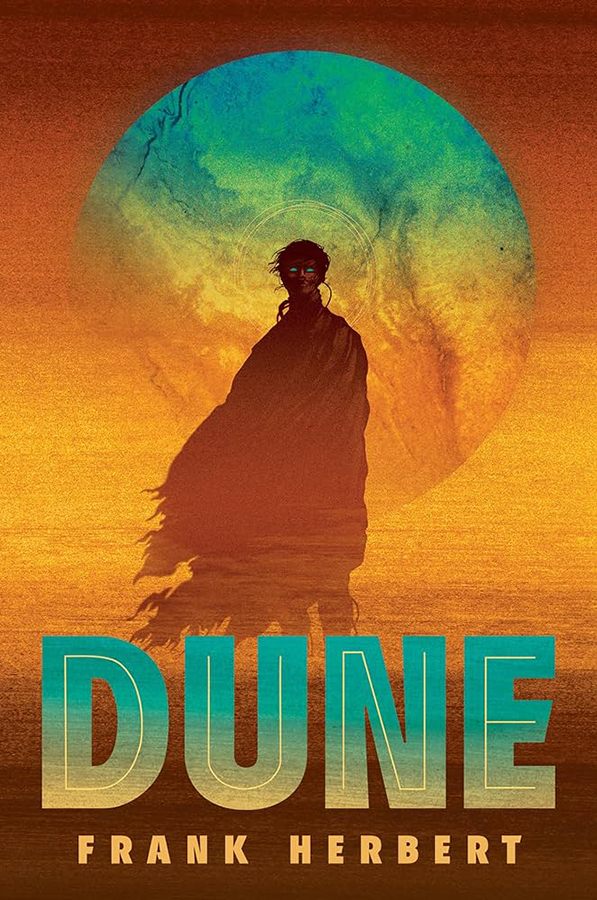
Dune remains the defining work of epic science fiction not because of its scale alone, but because of the depth beneath it. Herbert weaves ecology, religion, politics, power, and prophecy into a world that feels simultaneously ancient and futuristic. At the center of this vast tapestry is Paul Atreides, heir to a fallen house, whose exile among the Fremen of Arrakis becomes both a journey of survival and an initiation into forces—environmental, spiritual, and historical—that far exceed any individual’s control. As Paul rises toward messianic leadership, the novel reveals how charismatic power can blur into destiny, and how destiny can harden into something perilous and irreversible.
More than sixty years after publication, its influence remains everywhere—but the novel itself still exceeds the shadow it cast. Herbert’s achievement lies in how thoroughly he binds character to environment, belief to biology, myth to political necessity. The result is a story that feels inexhaustible: a meditation on empire, ecology, and the dangerous seductions of certainty, wrapped in the momentum of an adventure that reshaped the genre. Enduring, immense, and unsettlingly prescient, Dune continues to expand what science fiction can hold.
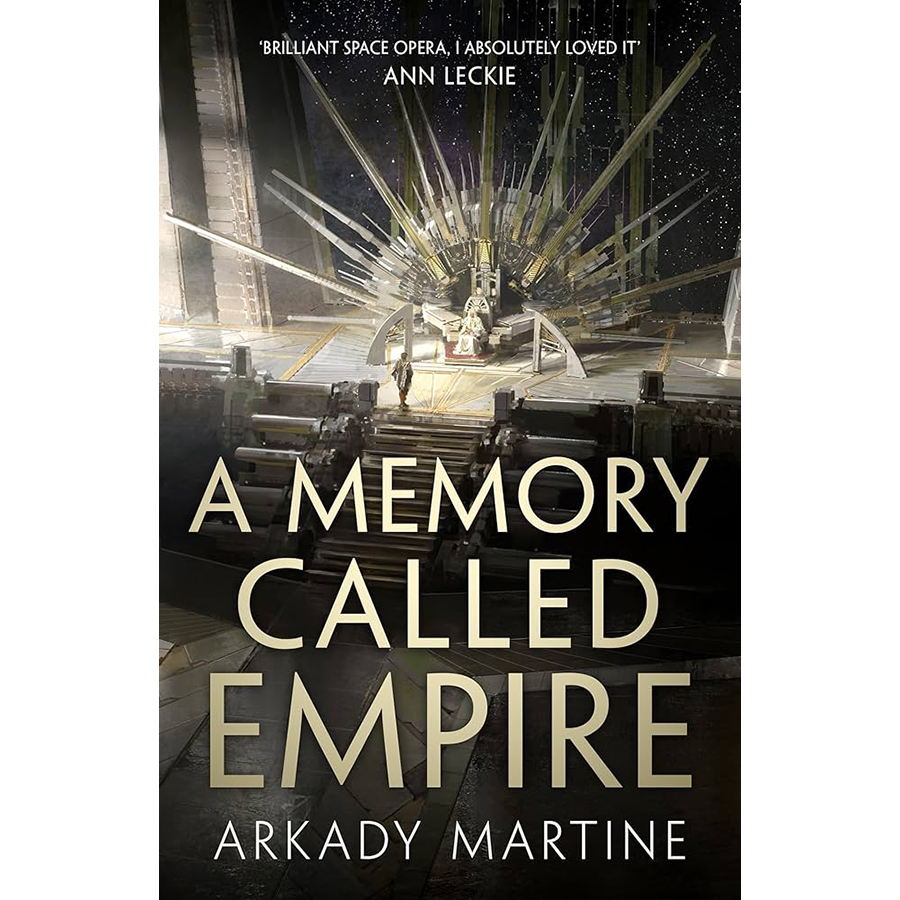
A Memory Called Empire, Arkady Martine
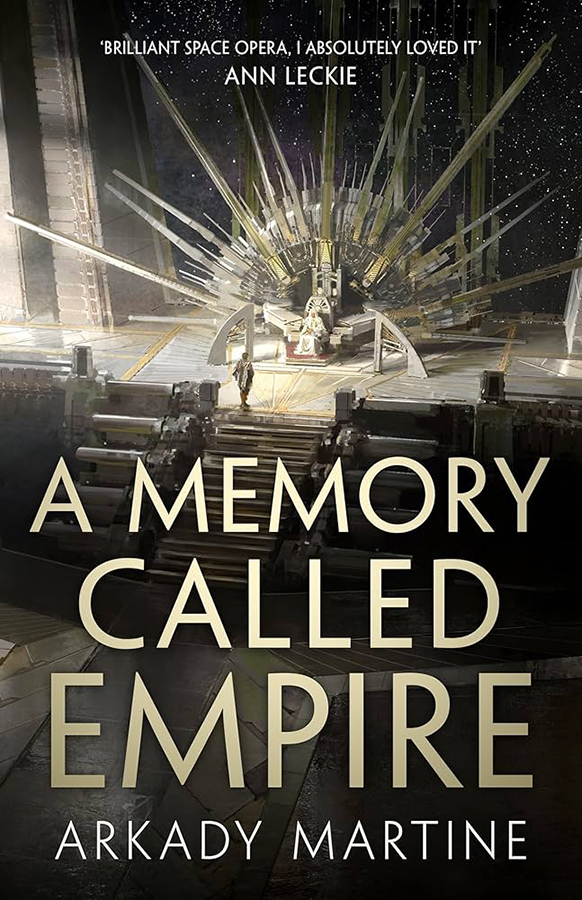
At once political thriller, cultural meditation, and deeply personal story, A Memory Called Empire explores what it means to admire an empire while fearing absorption into it. Martine writes with unusual precision about language, identity, and belonging, crafting a novel that feels intellectually rich without ever losing emotional intimacy. When Mahit Dzmare, an ambassador from a small, fiercely independent mining station, arrives in the vast Teixcalaanli Empire only to discover her predecessor has died under suspicious circumstances, she is thrust into a world whose poetry, politics, and power she reveres—and whose embrace threatens to overwrite her entirely. As Mahit navigates court intrigue, contested succession, and the failing technology that holds her predecessor’s memories inside her mind, the novel becomes a study of how empires reshape those drawn into their orbit.
Martine’s great strength lies in showing how identity is negotiated moment by moment—through language, through loyalty, through the stories people tell about themselves and the worlds they inhabit. The result is a work that feels both expansive and intimate, a portrait of empire that refuses easy binaries of inside and outside, self and other. Thoughtful, tense, and beautifully constructed, A Memory Called Empire explores the ways in which the most profound conflicts are not only political but personal: fought in the space between who we are and who we might become under the influence of a civilization we cannot help but love.
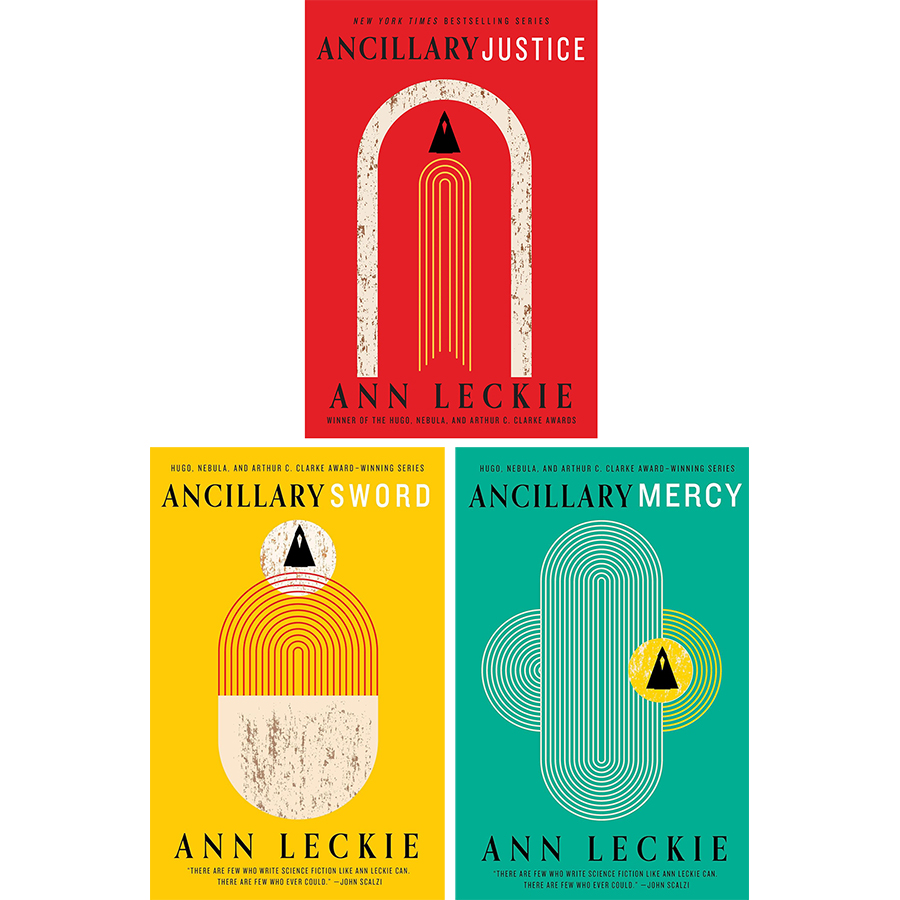
Imperial Radch, Ann Leckie
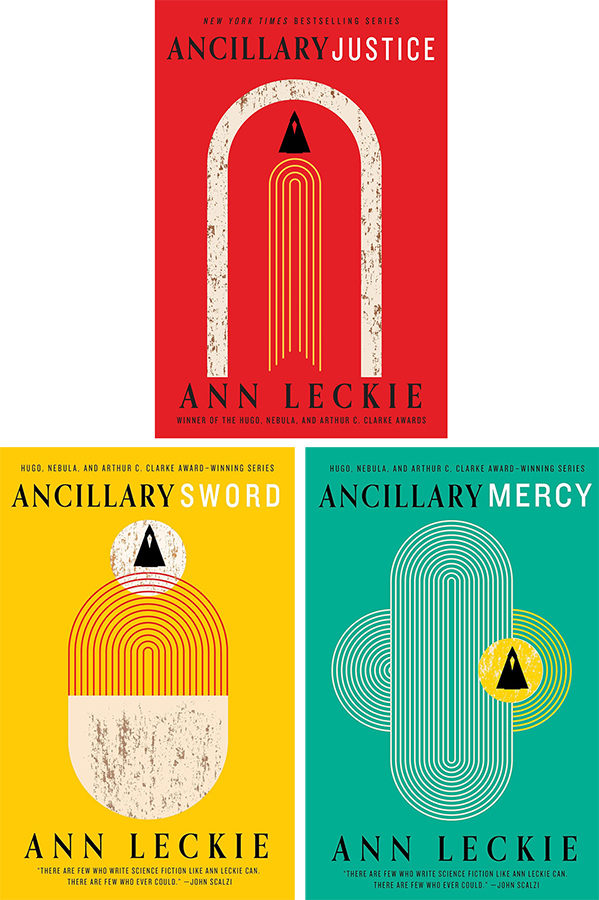
The Imperial Radch trilogy takes familiar space‑opera foundations and quietly transforms them into something stranger and more reflective. Through questions of consciousness, personhood, empire, and identity, Leckie constructs a story that feels both expansive and intensely interior. At its center is Breq, the last remaining fragment of a once‑vast starship AI, whose quest for justice leads her from the icy edges of the Radch to the heart of its political and philosophical contradictions. As Breq navigates a society built on rigid hierarchies, contested gender norms, and the lingering violence of imperial expansion, the trilogy becomes a study of what it means to inhabit a self that was once many—and to carry the memory of that multiplicity into a world that insists on individuality.
Its restraint is part of its power, allowing its ideas to unfold gradually and linger long after the final page. Leckie uses the tools of space opera—interstellar conflict, ancient ships, political intrigue—not for spectacle alone, but to explore how systems shape consciousness and how empathy can become a radical act. Thoughtful, inventive, and quietly revolutionary, the Imperial Radch trilogy endures because it reimagines the genre from the inside out, asking not just how empires rise and fall, but how individuals learn to live within—and beyond—their boundaries.
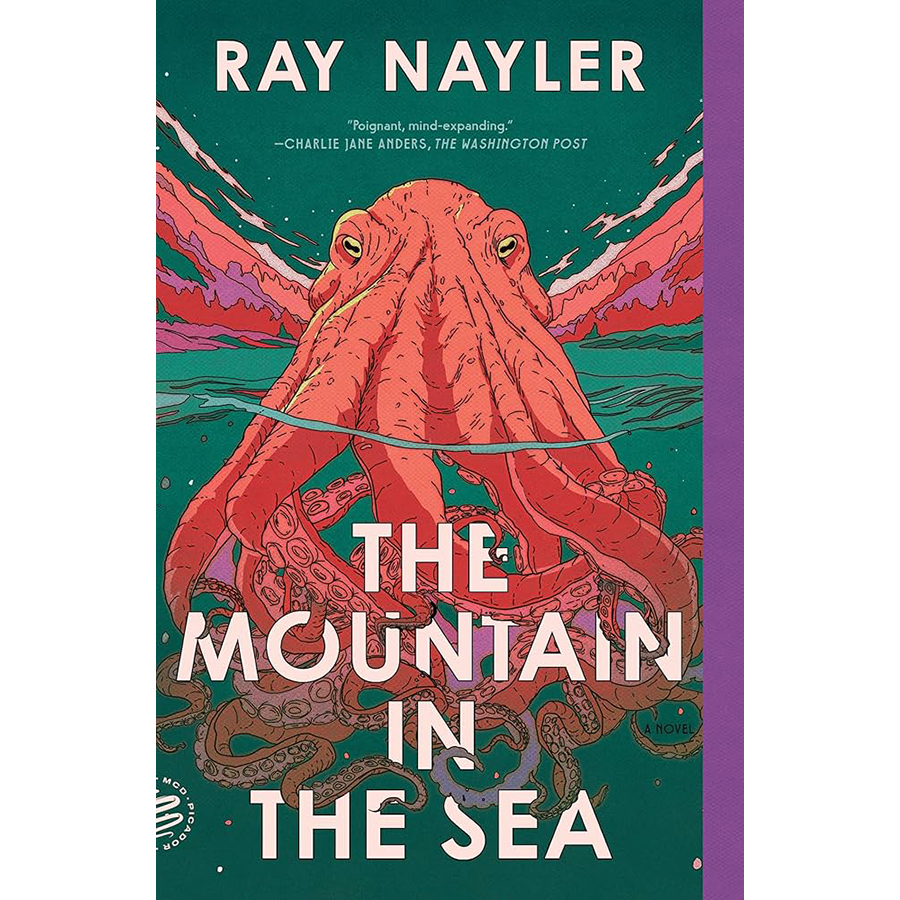
The Mountain In The Sea, Ray Nayler
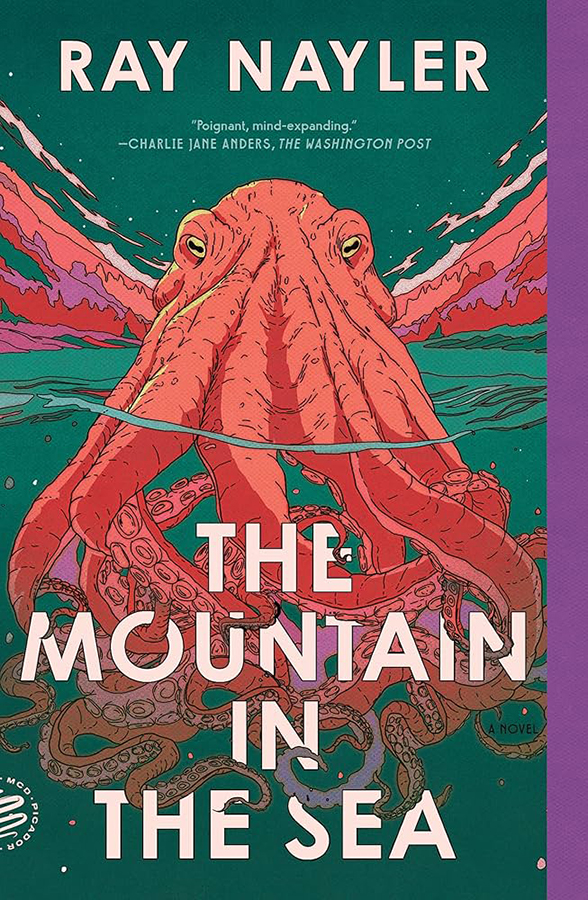
One of the most thoughtful works of contemporary science fiction, The Mountain in the Sea asks what true alien intelligence might look like—and whether humanity would even recognize it. Nayler balances philosophy, ecological anxiety, technology, and suspense with remarkable control, creating a novel that feels both timely and enduring. When Dr. Ha Nguyen is sent to a remote archipelago to study an unusually sophisticated species of octopus, her research becomes entangled with corporate secrecy, military ambition, and the ethical implications of encountering a mind fundamentally unlike our own. As parallel storylines—an enslaved worker on an AI‑controlled fishing vessel, a hacker navigating a world of pervasive surveillance—begin to echo and refract the central mystery, the novel reveals how interconnected and vulnerable all intelligent life may be.
Nayler’s achievement lies in how deftly he binds scientific curiosity to moral urgency, showing that the question of whether we can communicate with another species is inseparable from how we treat our own. The result is a work that feels expansive yet intimate, speculative yet grounded in the real pressures shaping the planet. Thoughtful, unsettling, and quietly profound, The Mountain in the Sea understands that the search for other minds is also a search for who we are—and who we might still become.
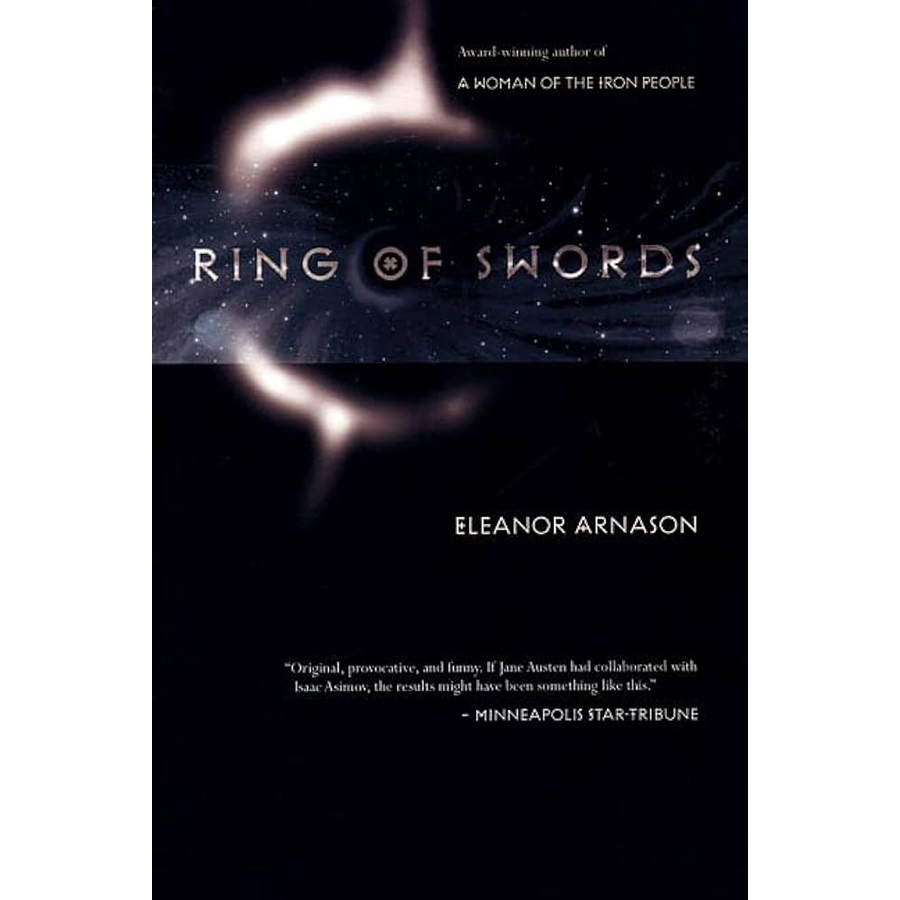
Ring Of Swords, Eleanor Arnason
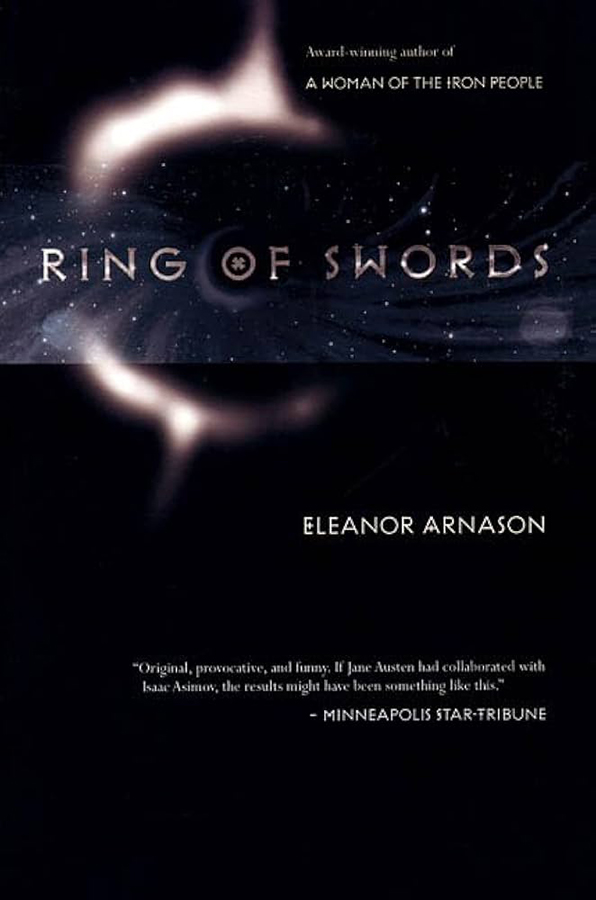
Quietly brilliant and too often overlooked, Ring of Swords approaches first contact through anthropology rather than spectacle. Arnason is less interested in war or conquest than in culture, misunderstanding, and the subtle discomfort of encountering a civilization genuinely unlike our own. When human linguist Anna Perez is brought into negotiations with the alien Hwarhath—an all‑male, warlike society whose social structures challenge every human assumption—she becomes both mediator and outsider, navigating a fragile space where mistranslation can carry the weight of violence. As the political tensions surrounding a long‑avoided conflict rise, the novel unfolds through small gestures, careful conversations, and the uneasy recognition that mutual comprehension may be possible only if both sides are willing to see themselves reflected in the other.
The result is restrained, intelligent science fiction that deepens on reflection. Arnason uses the tools of anthropology—ritual, kinship, taboo, the stories cultures tell about themselves—to reveal how alienness is constructed and how easily it can be dismantled or reinforced. Thoughtful, humane, and quietly radical, Ring of Swords shows that the most transformative encounters are not battles or revelations, but the slow, uncertain work of learning how to listen
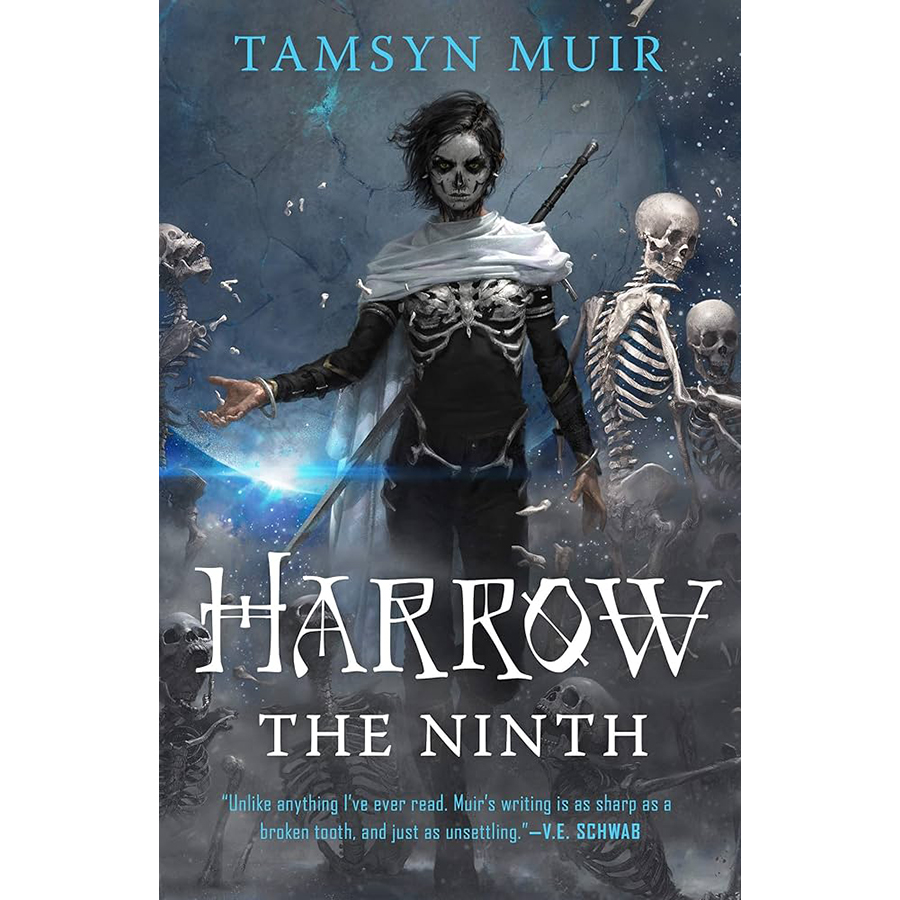
Harrow The Ninth, Tamsyn Muir
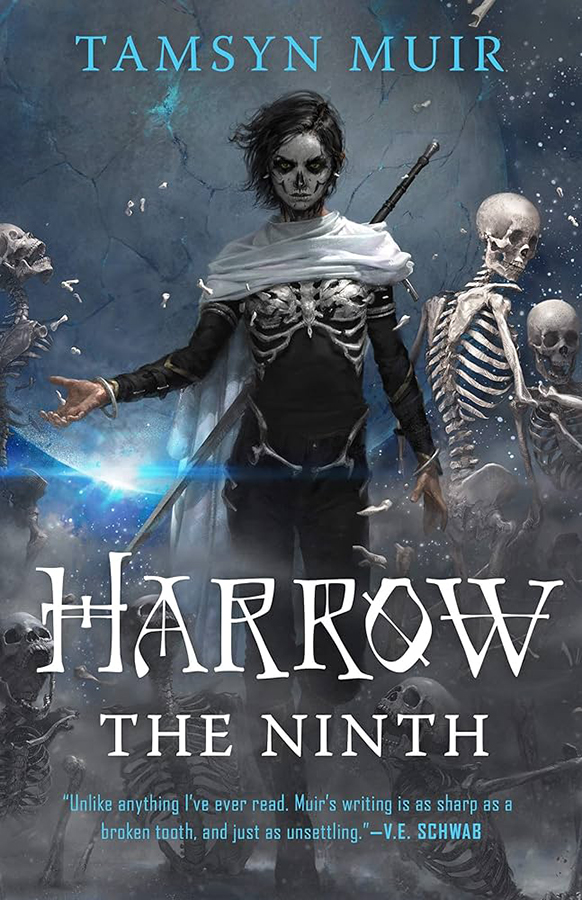
Harrow the Ninth is disorienting, ambitious, and structurally fearless—a novel that demands surrender before it reveals its design. Muir fractures the narrative into shifting perspectives, unreliable memories, and gothic absurdity, creating a reading experience that feels like navigating a structure built from haunting grief, devotion, and half‑remembered truths. Following the events of Gideon the Ninth, Harrow struggles to master impossible necromantic power while contending with voices she cannot trust and a reality that refuses to stay fixed. The novel becomes an exploration of how identity reshapes itself under pressure—and what the mind is willing to rewrite in order to survive.
Beneath its labyrinthine structure lies a surprisingly emotional story about memory, loss, and the fierce, bewildering bonds that tie people together even when they cannot name them. Muir balances cosmic horror with razor‑sharp humor and moments of startling vulnerability, crafting a book that feels intimate and operatically strange. Endlessly inventive and defiantly singular, Harrow the Ninth reveals how the most powerful stories are the ones we tell ourselves, even when they refuse to stay still.
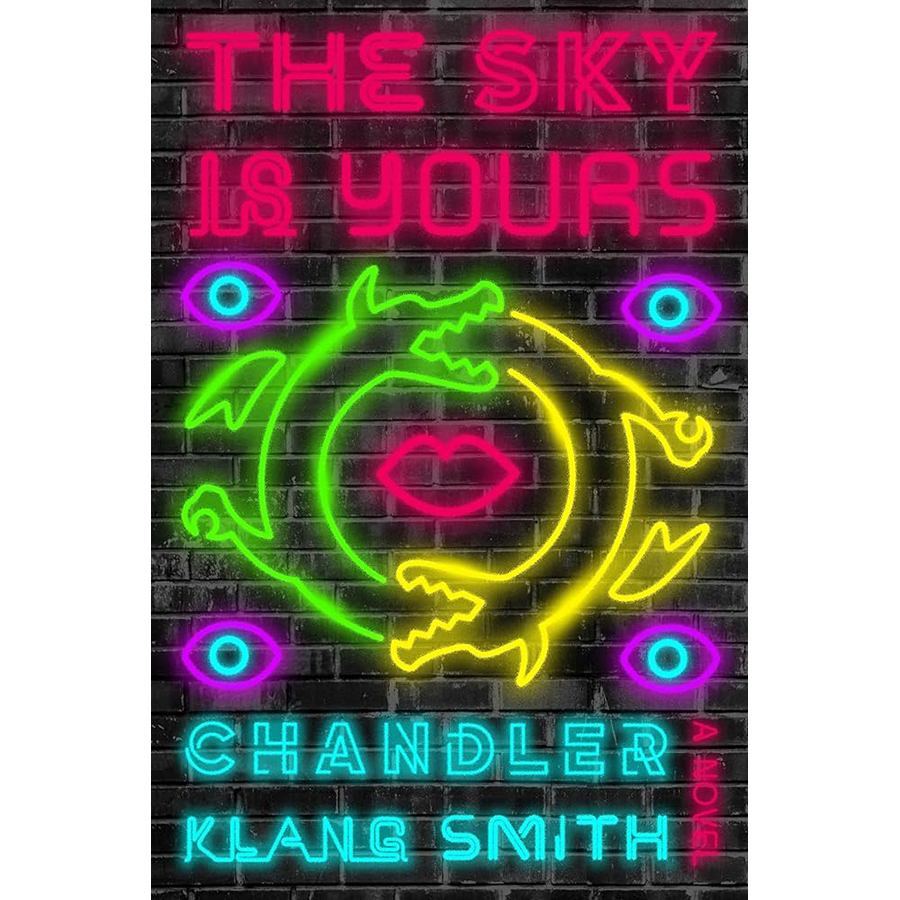
The Sky Is Yours, Chandler Klang Smith
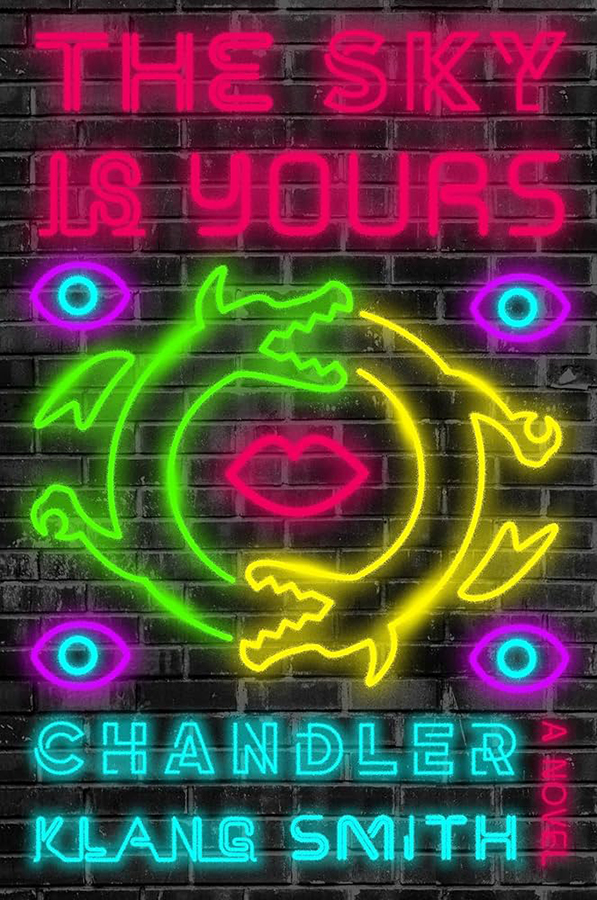
Part dystopian satire, part grotesque fantasy, The Sky Is Yours imagines a decaying city permanently overshadowed by dragons. Chandler Klang Smith embraces excess, absurdity, and theatricality without losing sight of the human desperation beneath it all. The story follows three unlikely companions—a pampered heir, a feral girl raised on reality‑TV detritus, and a sheltered young woman bred for marriage—whose intersecting paths drag them through a metropolis collapsing under its own contradictions. As they navigate ruined neighborhoods, cultish enclaves, and the ever‑present threat of fire from above, the novel becomes a portrait of a society so numbed by spectacle that catastrophe feels almost ordinary.
Strange, stylish, and unexpectedly affecting, it occupies a category almost entirely its own. Smith uses exaggeration not as parody alone, but as a way of revealing the emotional truths that lurk beneath cultural decay: loneliness, yearning, the hunger for reinvention. The result is a book that feels both anarchic and precise, a riot of tone and texture that lingers because it understands how absurdity and sincerity can coexist in the same breath. Unruly, imaginative, and unexpectedly humane, The Sky Is Yours is a reminder of how elastic science fiction can be.
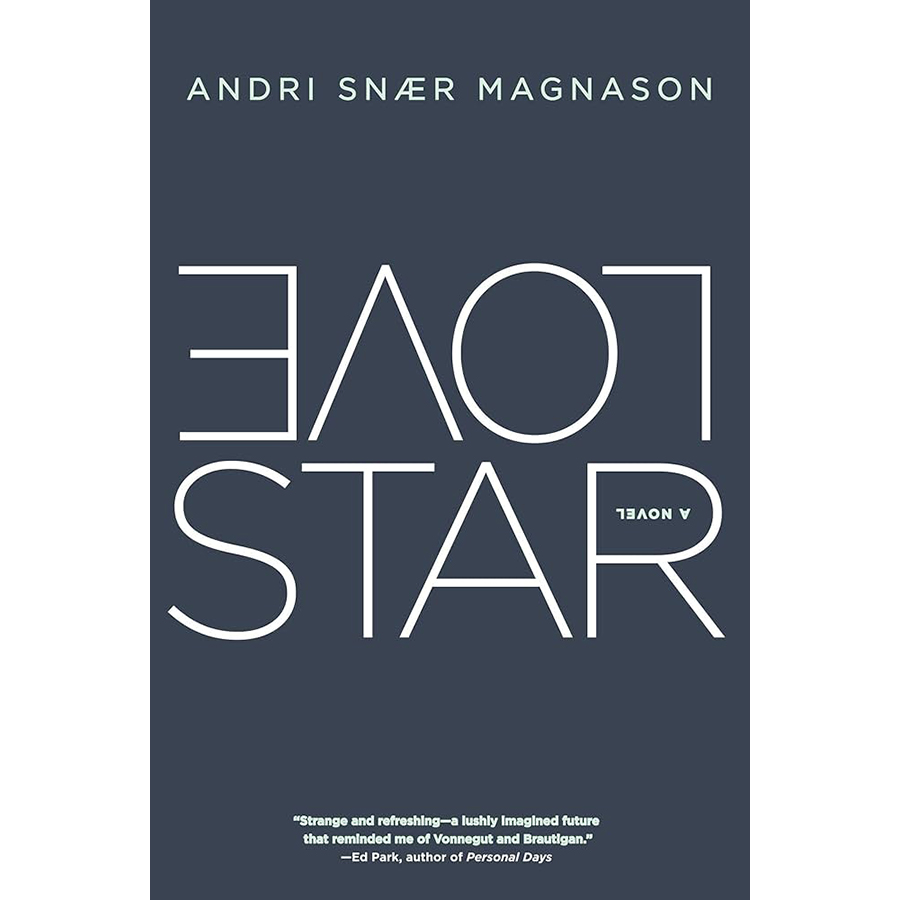
LoveStar, Andri Snaer Magnason
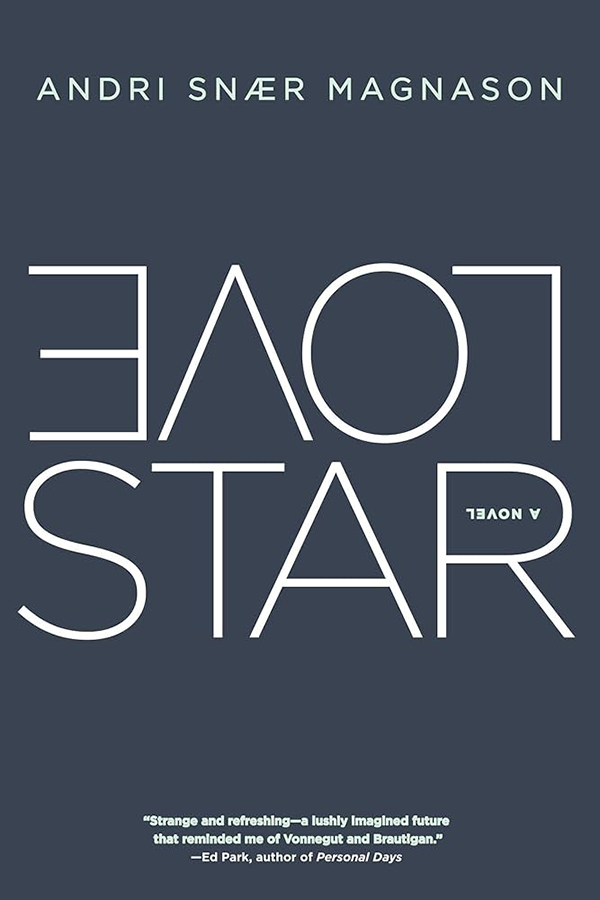
Lovestar presents a future shaped not by tyrants or catastrophe, but by systems so seamless they become invisible. Magnason explores data, technology, commerce, and human connection with an almost fable‑like clarity, crafting a novel that feels simultaneously playful, melancholic, and quietly prophetic. When the all‑powerful Lovestar Corporation perfects algorithms capable of predicting everything from consumer desire to romantic compatibility, society reorganizes itself around those calculations—until one couple’s refusal to accept their assigned fate exposes the cracks in a world built on perfect optimization. As their search for autonomy collides with the corporation’s mythic founder and the machinery of a culture that has outsourced meaning itself, the novel becomes a meditation on how easily convenience can harden into control.
Magnason’s great strength lies in his ability to balance whimsy with sorrow, satire with sincerity. The result is a story that feels both intimate and allegorical, a warning wrapped in wonder. Strange, tender, and sharply observant, Lovestar understands that the most profound disruptions are not always violent—they can arrive quietly, disguised as progress, until we no longer recognize the shape of our own lives.
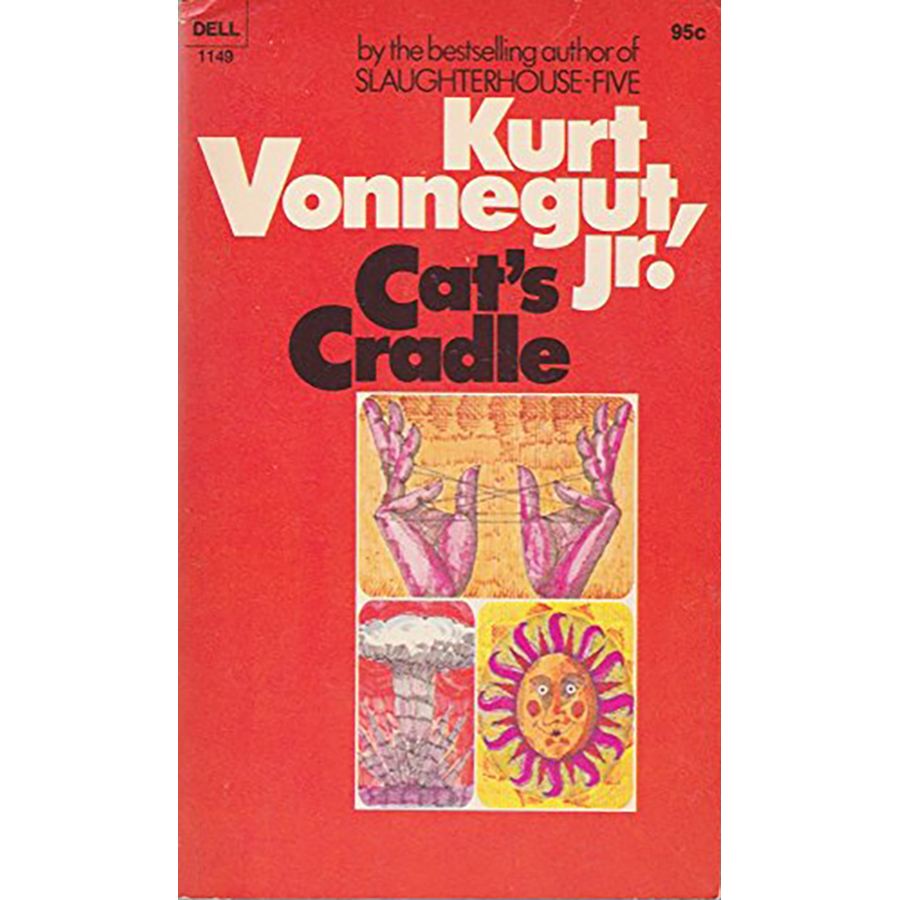
Cat's Cradle, Kurt Vonnegut Jr.
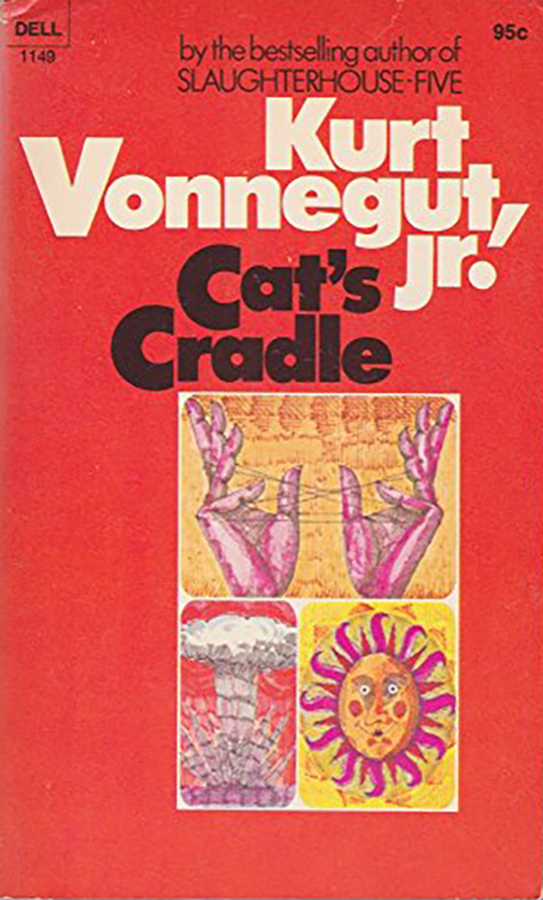
Darkly funny and deceptively simple, Cat’s Cradle remains one of science fiction’s sharpest examinations of belief, scientific responsibility, and humanity’s talent for self‑destruction. Vonnegut’s humor keeps the novel light on the surface even as its conclusions grow increasingly bleak. The story follows an aimless writer whose research into the life of a physicist—creator of a substance capable of freezing the world—draws him into a spiraling chain of coincidences, invented religions, and geopolitical absurdities that feel both surreal and uncomfortably plausible. As the narrative drifts from small‑town America to the island nation of San Lorenzo, the book reveals how easily people cling to comforting fictions, and how catastrophically those fictions can collide with scientific hubris.
Few books are this entertaining while saying something this devastating. Vonnegut’s gift is his ability to make apocalypse feel almost casual, a natural extension of human folly rather than an aberration. The result is a novel that reads like a joke with a razor‑thin punchline—playful, bitter, and enduringly relevant, a book whose offer may touch your soul (provided your feet are clean and nicely tended). Cat’s Cradle lingers because it understands that the end of the world is rarely a single event; more often, it’s a story we’ve been telling ourselves all along.
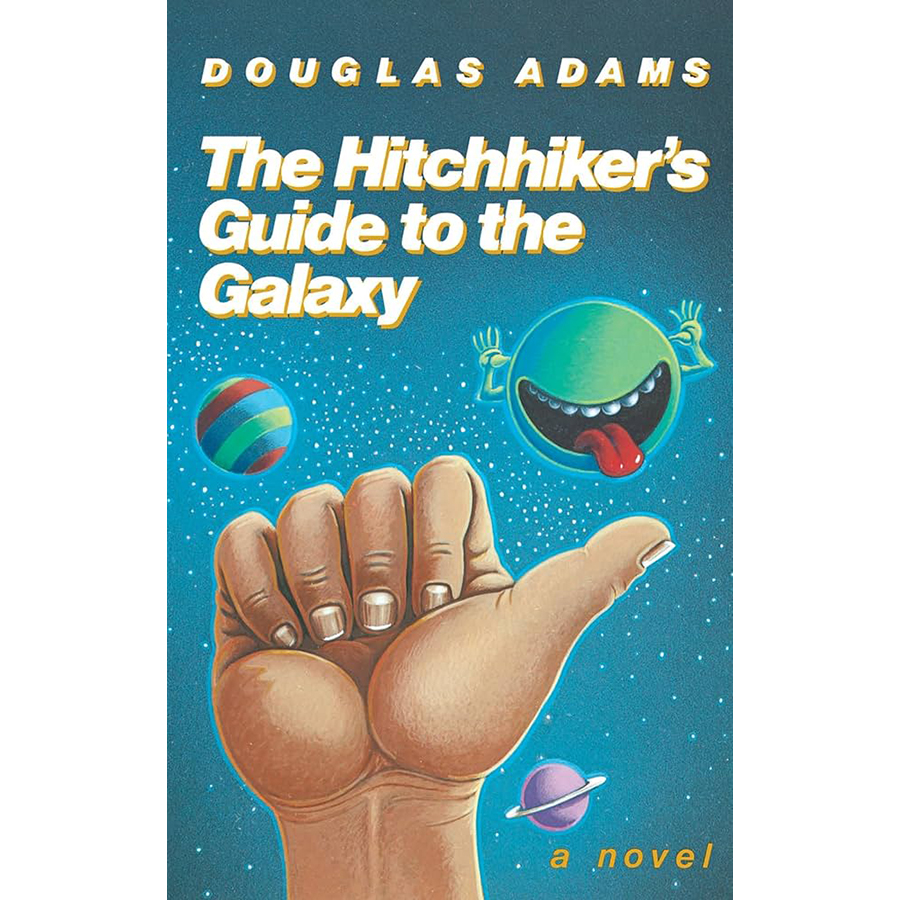
The Hitchhiker's Guide To The Galaxy, Douglas Adams
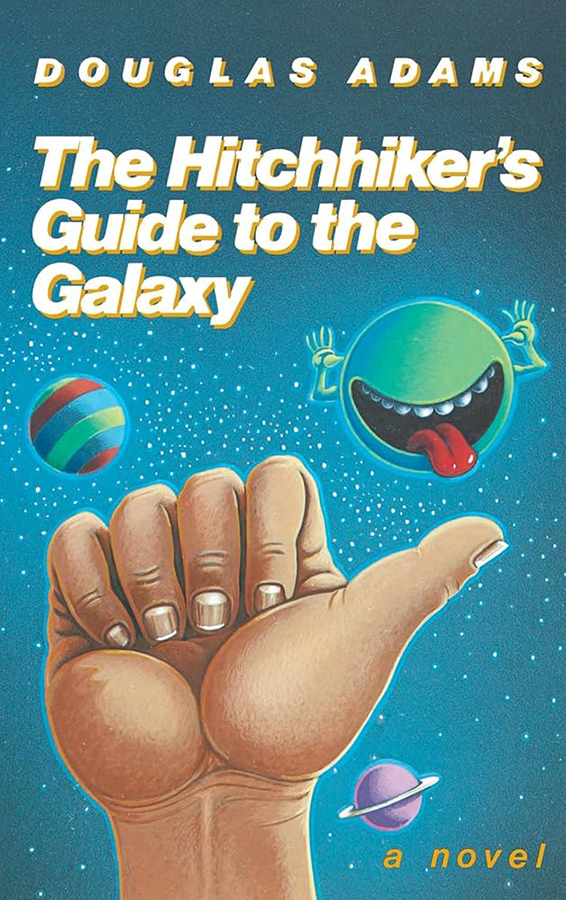
The Hitchhiker’s Guide to the Galaxy treats the vastness of the universe not with awe, but with absurdity. Adams combines philosophical humor, cosmic scale, and relentless wit into a series that remains endlessly quotable without losing its intelligence. What begins with the destruction of Earth and the accidental escape of Arthur Dent—an unassuming human in his bathrobe—quickly expands into a tour of bureaucratic aliens, improbable physics, depressed robots, and the kind of cosmic coincidences that make fate look like a practical joke. As Arthur and his companions ricochet from one impossible situation to the next, the series becomes a celebration of curiosity in the face of meaninglessness, and of laughter as a perfectly reasonable response to the universe’s indifference.
Beneath the comedy lies a strangely comforting acceptance of chaos. Adams uses humor not to diminish the cosmos, but to remind us that bewilderment is a universal condition and that even the most nonsensical detours can reveal something true. Endlessly inventive, slyly humane, and gloriously unserious, The Hitchhiker’s Guide to the Galaxy shows us that the best way to face the infinite is with a towel, a bit of perspective, and the willingness to enjoy the ride.
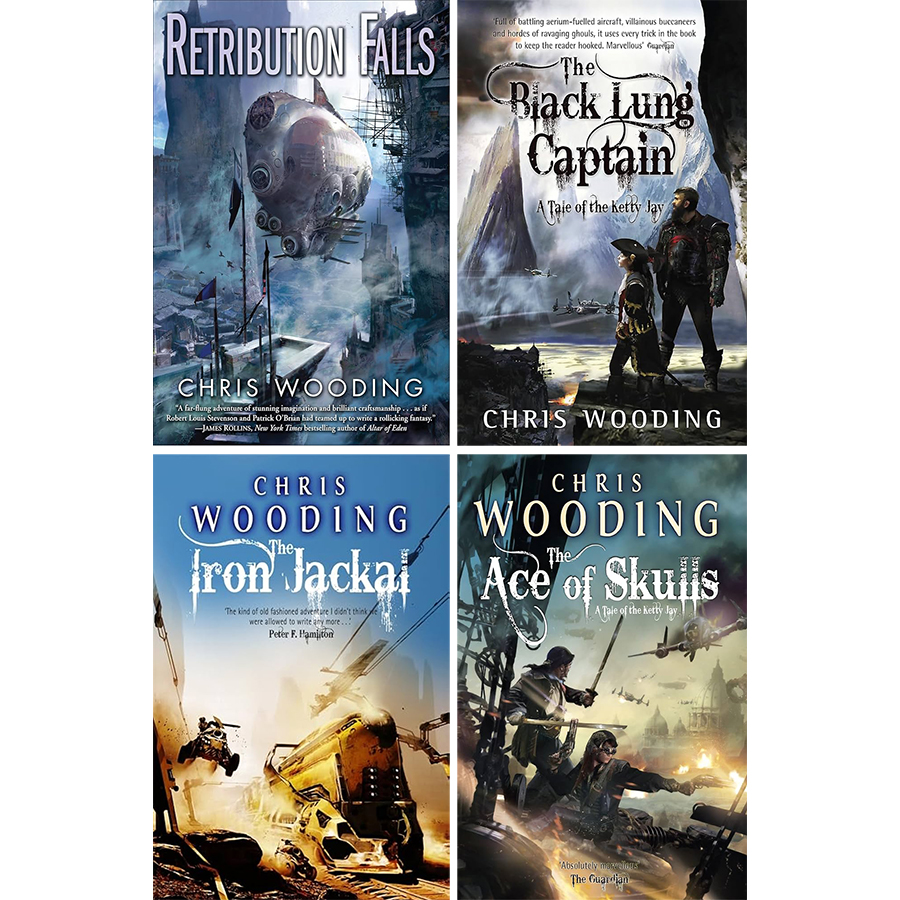
Tales Of The Ketty Jay, Chris Wooding
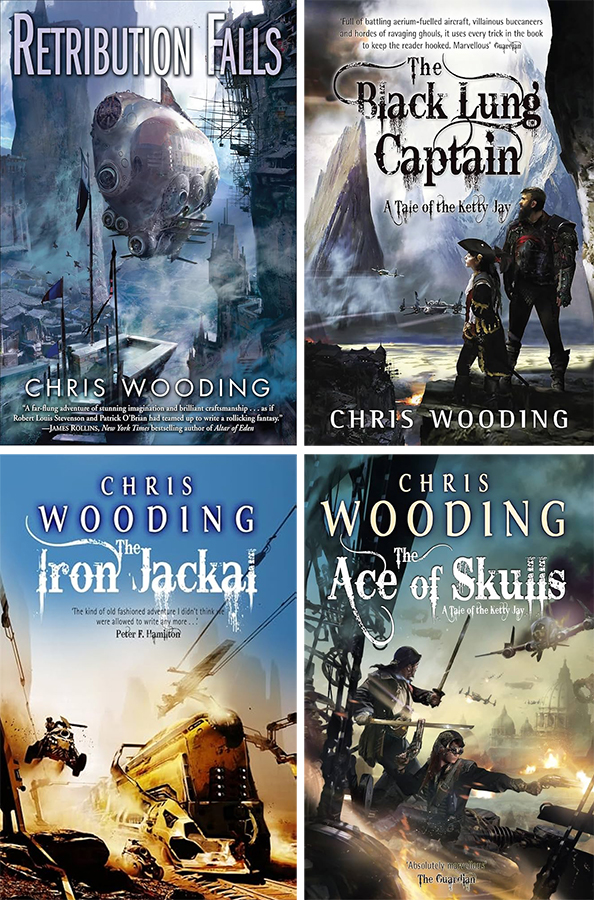
Fast, atmospheric, and deeply character‑driven, Tales of the Ketty Jay captures the joy of adventure science fiction without sacrificing emotional weight. Wooding balances action, humor, melancholy, and found‑family dynamics with remarkable ease, creating a series that feels timeless in the best possible way. Across the crew’s misadventures—smuggling jobs gone sideways, skyship battles, occult mysteries, and the kind of trouble only desperation can justify—the books trace the gradual, reluctant formation of a family among people who have spent most of their lives running from connection. As Captain Darian Frey and his mismatched companions stumble from crisis to crisis, the series becomes a study in how loyalty is built not through grand gestures but through accumulated moments of trust, failure, and stubborn affection.
What makes the Ketty Jay stories endure is their generosity: their willingness to let flawed characters grow, to let humor coexist with heartbreak, and to treat adventure not as escapism but as a path toward self‑recognition. Wooding’s world is gritty without being grim, exuberant without being frivolous, and always anchored in the messy humanity of its crew. The result is a series that feels like a classic from the moment you begin it—rollicking, heartfelt, and impossible not to root for.
Station 11, Emily St. John Mandel
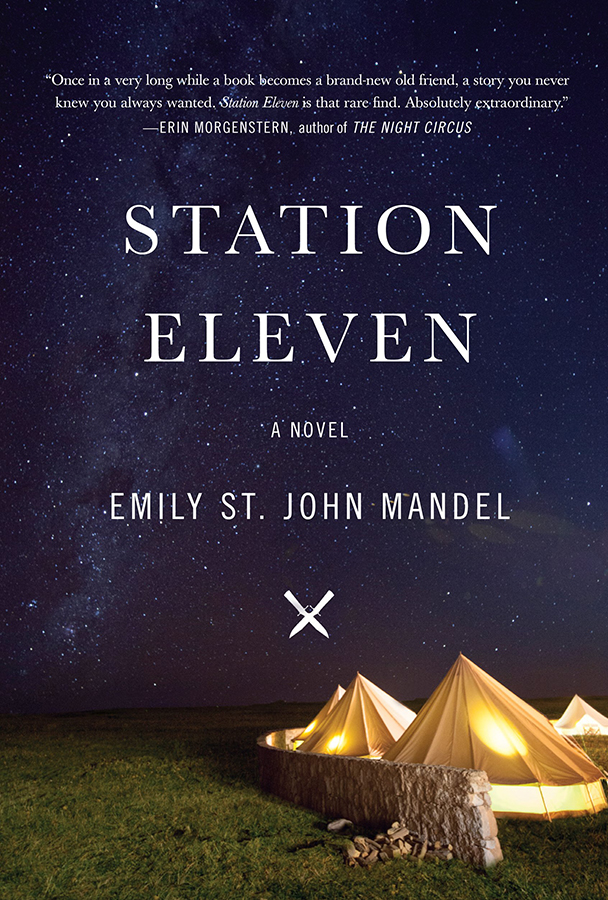
Station Eleven is less concerned with apocalypse itself than with what survives afterward: memory, art, ritual, and the need to remain connected to one another. Mandel writes with unusual restraint and clarity, allowing small moments of beauty and grief to accumulate gradually. Moving between the final days before a pandemic and the scattered communities that emerge twenty years later, the novel follows a traveling Shakespearean troupe, a graphic novel that becomes a kind of scripture, and the lingering echoes of a single night onstage. As these threads intersect across time, the book reveals how meaning persists not through grand narratives but through the fragile, persistent acts of making and remembering.
The result is a novel that feels quiet on the surface but monumental in emotional effect. Mandel shows that civilization is not defined by its infrastructure but by the stories we carry, the art we preserve, and the ways we choose to care for one another when the world has fallen away. Station Eleven endures because it understands that survival is insufficient—and that what remains after catastrophe is, in its own way, a testament to hope.