
The Core Speculative Fiction Shelf
Where speculative literature becomes strange, human, and impossible to categorize.
These are stories of worlds drifting out of alignment — civilizations fraying at the edges, systems turning monstrous, myths reasserting themselves, and reality becoming difficult to interpret. Some unfold in the aftermath of collapse; others take place in societies that still appear functional, even as something essential beneath them begins to warp. Together, they explore speculative fiction not simply as futurism or fantasy, but as a way of confronting transformation itself: ecological, political, spiritual, linguistic, and deeply human.
What unites these books is not genre, but atmosphere — a sense that the world has become unstable, excessive, unknowable, or strangely alive. They move from grief to absurdity, from ruin to reinvention, from intimate survival to cosmic disorientation. Some are devastating, others darkly funny, others wondrous in ways that defy easy explanation. All of them inhabit the space where meaning begins to fracture, strange new systems emerge, and humanity struggles to remake itself inside worlds that no longer fully make sense.
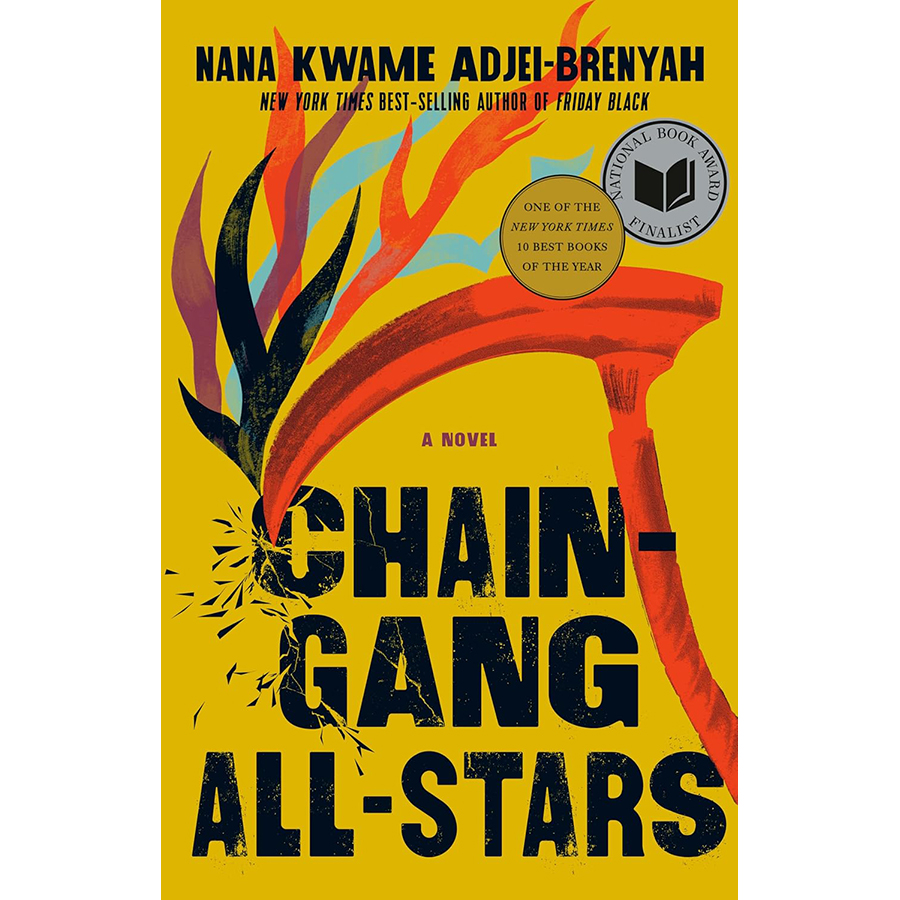
Chain-Gang All-Stars, Nana Kwame Adjei-Brenyah
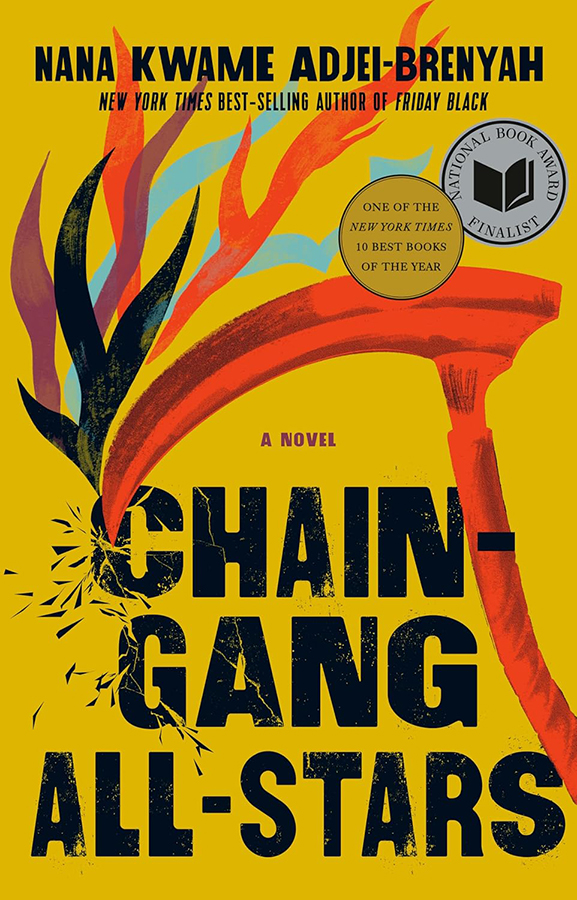
Chain-Gang All-Stars begins with a premise so exaggerated it seems farcical—Rome meets reality TV, where the incarcerated are transformed into televised gladiators. But the exaggeration quickly reveals itself as something uncomfortably closer to home. In this near-future America, punishment has merged seamlessly with entertainment, and the nation’s most popular program is a corporate bloodsport that turns human beings into both celebrities and disposable assets.
The novel follows two of the system’s brightest stars, fighters whose fame is inseparable from the violence they are forced to enact, and whose survival has made them symbols of a freedom they can never quite reach. Adjei-Brenyah takes the prison system, the entertainment industry, and corporate profit—and fuses them together. The result is a world that feels heightened yet unmistakably familiar, a place where the line between audience and accomplice has become nearly transparent. The book’s imagined future doesn’t distract from reality; it sharpens it until it cuts.
Chain-Gang All-Stars is satirical, furious, and grotesquely grandiose, then suddenly intimate and tender. The spectacle is loud, but the emotional center is quiet: small gestures of care, the fragile bonds that form under impossible pressure, the stubborn insistence that a person is more than the role a system assigns. Even in its most brutal moments, the book refuses to flatten its characters into symbols or statistics. It insists on their humanity.
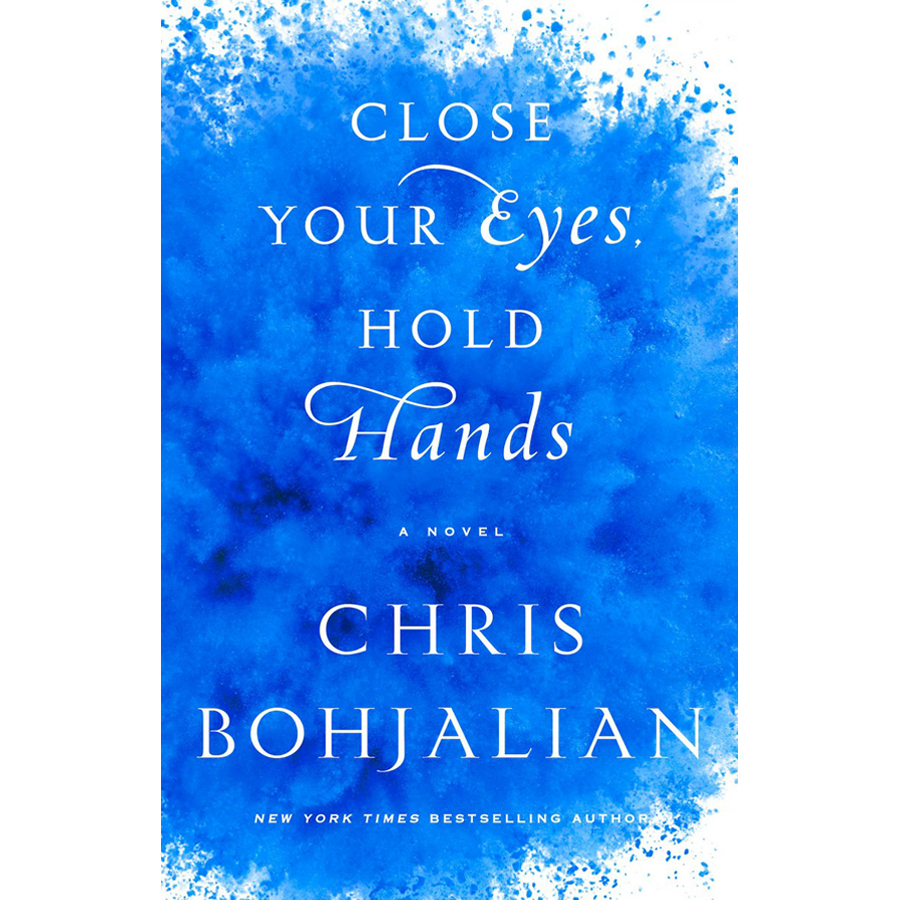
Close Your Eyes, Hold Hands, Chris Bohjalian
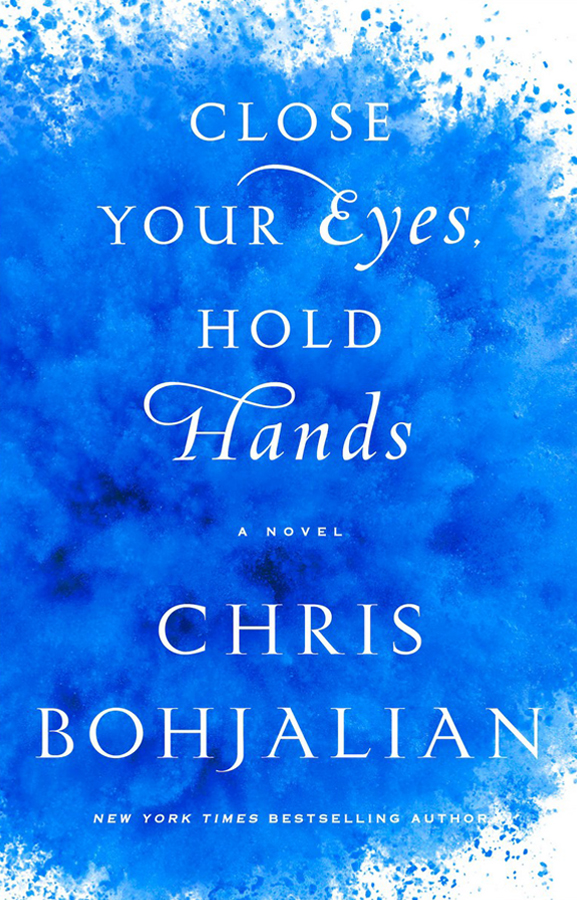
When a nuclear plant meltdown destroys her home and her parents are blamed, Emily Shepard runs, convinced the world wants her punished for something she didn’t do. She drifts through homelessness, danger, and the aftershocks of trauma, attempting to survive alone in a life that has collapsed without warning. She narrates her journey with a voice that’s sharp, self‑aware, and unexpectedly hilarious. She is the chaos, the clarity, and the fragile hope.
Emily’s world loses its familiar structure and her experience with reality becomes unstable —time blurs, memory fractures, and the rules that once governed safety, identity, and belonging dissolve. The meltdown is both literal and psychological. Emily isn't just scavenging for food and shelter—she's scavenging for meaning. Her fascination with Emily Dickinson nourishes an interior life of poetry and imagination. And she uncovers a sense of responsibility and protectiveness when she takes on Cameron, a nine-year-old orphan boy living on the streets. Bohjalian doesn’t ask you to analyze the catastrophe; he asks you to feel the disorientation of living inside it, where every choice is improvised and every moment feels like borrowed time.
Close Your Eyes, Hold Hands is a collision of extremes. It’s deeply funny—Emily’s humor is quick, defensive, and startlingly alive—yet it sits right beside horror, loneliness, and the quiet brutality of being a child forced to navigate an adult world. The comedy doesn’t undercut the darkness; it makes the darkness sharper, more human, more bearable. Emily’s voice is the anchor that keeps the story from drifting into pure bleakness. She’s unreliable in the way traumatized people often are. But throughout her journey, Emily begins to understand herself.
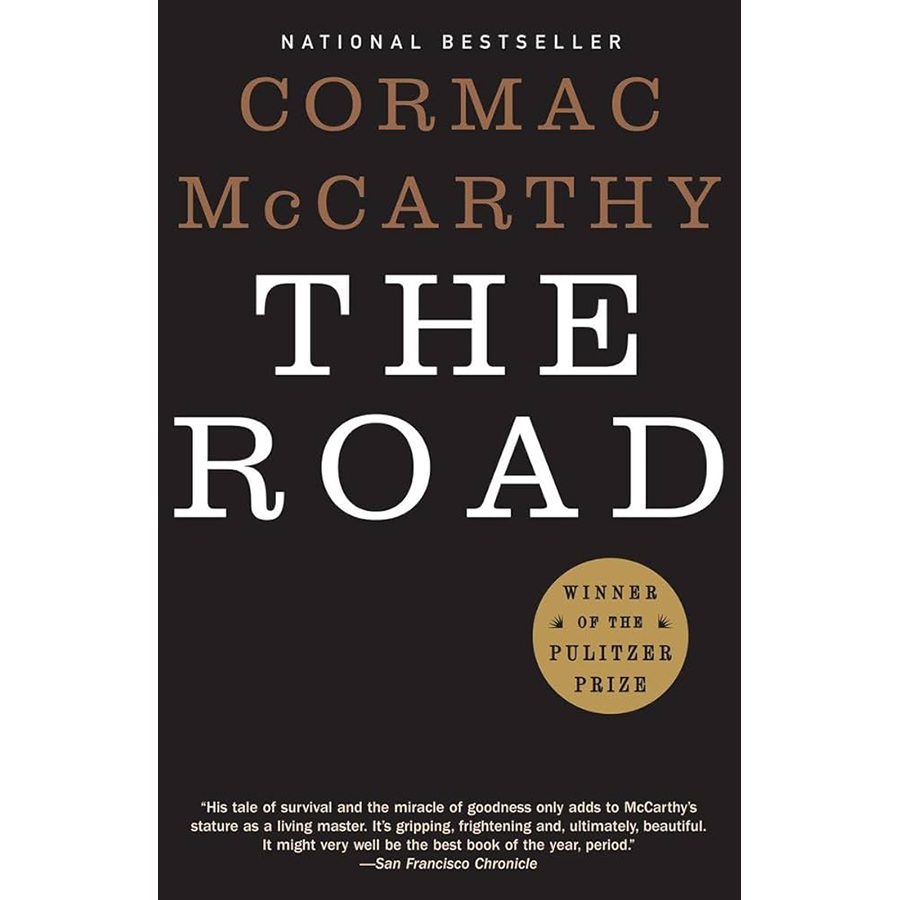
The Road, Cormac McCarthy
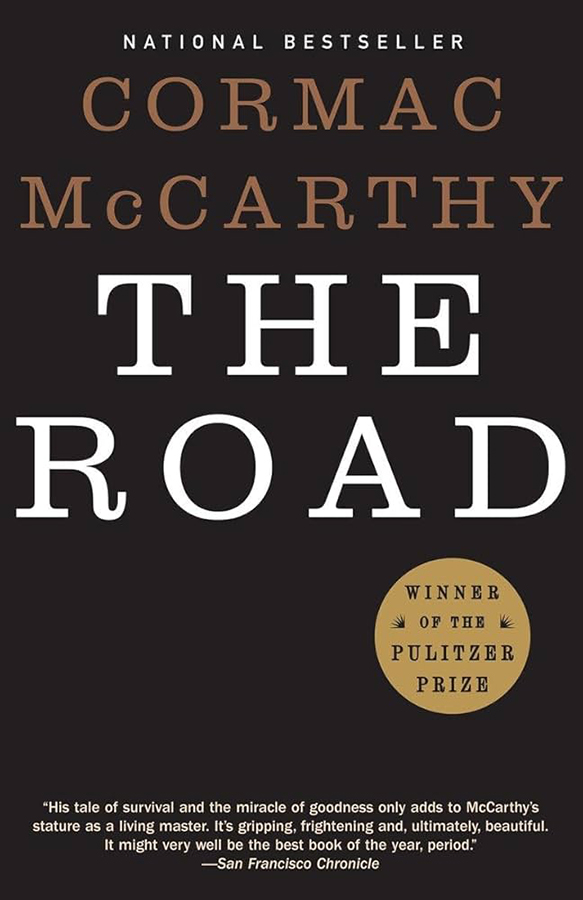
The Road follows a father and son moving through a landscape scraped down to its bones. Cities collapse into gray dust, forests stand like charred ribs, and the sky never clears. The world has lost its temperature, its color, its memory. What remains is the rhythm of walking, scavenging, hiding, waking, and walking again. The man carries a pistol with two bullets. The boy carries whatever light is left.
The collapse has stripped reality of its familiar structure. Time feels stalled, seasons indistinguishable, morality unstable. Every encounter is a calculation. Every silence has weight. The rules that once governed safety and trust have eroded, leaving only instinct and the thin thread of their bond. The road itself becomes a kind of moving boundary between what’s dead and what refuses to die.
The prose mirrors the landscape—spare, exact, unadorned. Humor appears in small, dry flashes, the kind that surface when language is almost gone. Brutality arrives without warning. So does grace. The boy’s presence alters the air around them; his questions, his hesitations, his stubborn decency create a countercurrent against the world’s ruin. The man’s vigilance is relentless, but it’s the boy who keeps the story from collapsing into despair.
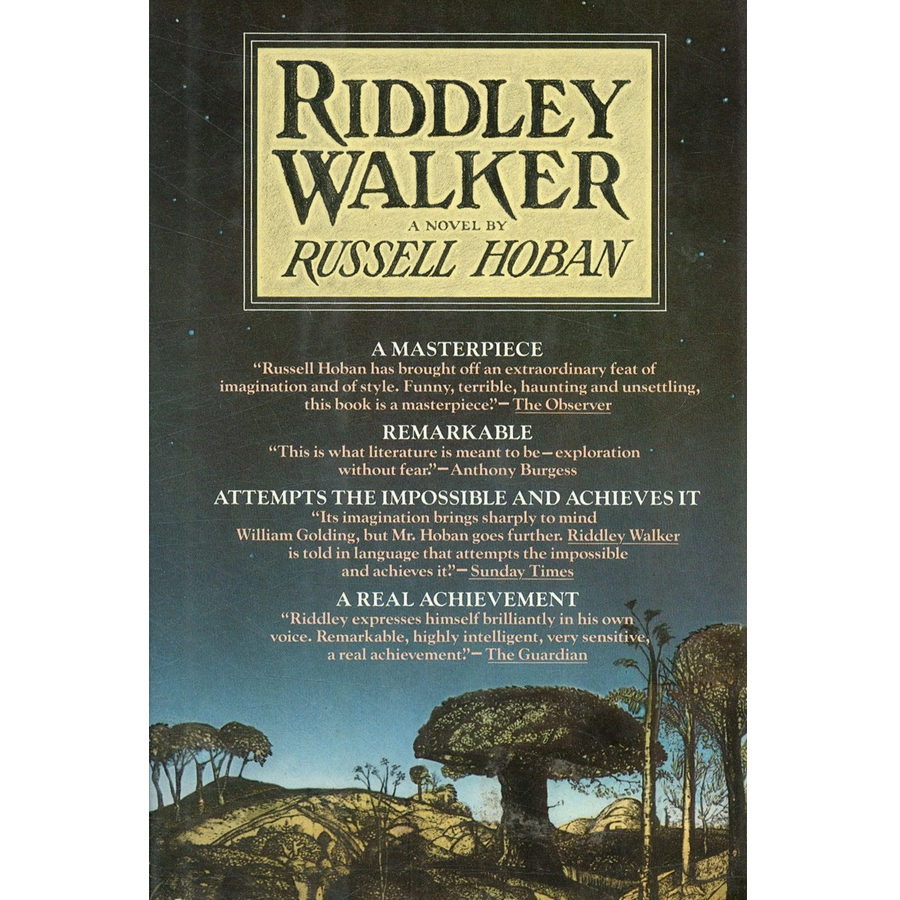
Riddley Walker, Russell Hoban
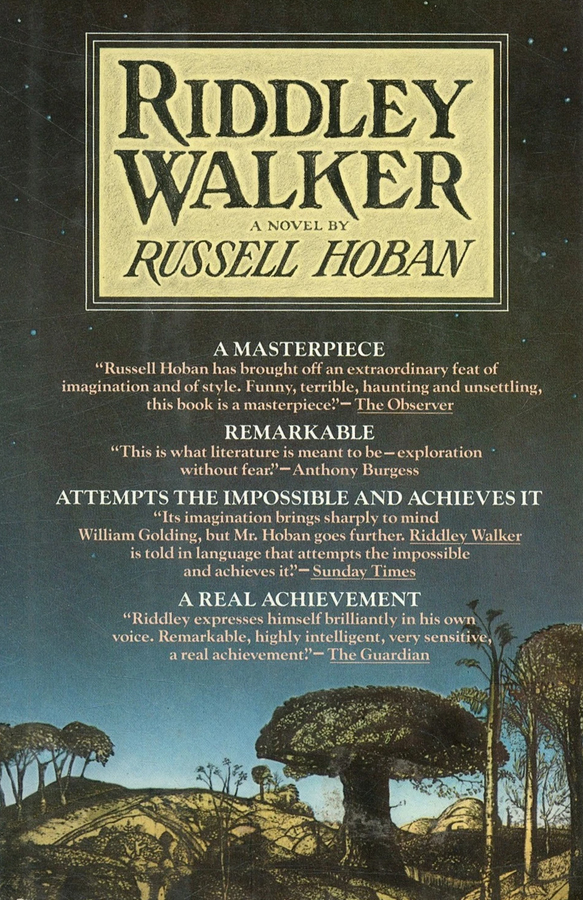
Riddley Walker unfolds through a voice that feels both ancient and newly born. Riddley’s broken, reassembled English isn’t a stylistic trick; it’s the world’s texture. Every sentence carries the weight of a civilization that exploded long ago and left only fragments behind—half‑remembered myths, misfired rituals, stories repeated until they warp. Riddley moves through this landscape with a mix of curiosity, fear, and stubborn intelligence, trying to make sense of a language that no longer matches the world it describes.
The ground feels unstable because the words are unstable. Meaning shifts underfoot. History arrives in pieces, misheard and misinterpreted, yet treated as sacred. The past is a rumor. The future is a guess. Memory is debris, and stories have mutated under the collapsed scaffolding of knowledge. From this disorientation comes the sense that every idea has been bent by the blast, and meaning has to be rebuilt from the rubble of its own vocabulary.
Riddley’s language keeps colliding with the world’s brutality and its strange, flickering beauty. Humor surfaces in odd, crooked places. So does dread. So does wonder. The tone shifts like weather—bleak one moment, sly the next, then suddenly luminous in a way that feels accidental and true. Riddley’s voice lingers long after the plot fades, a reminder of how fragile language becomes when the world that shaped it has burned away.
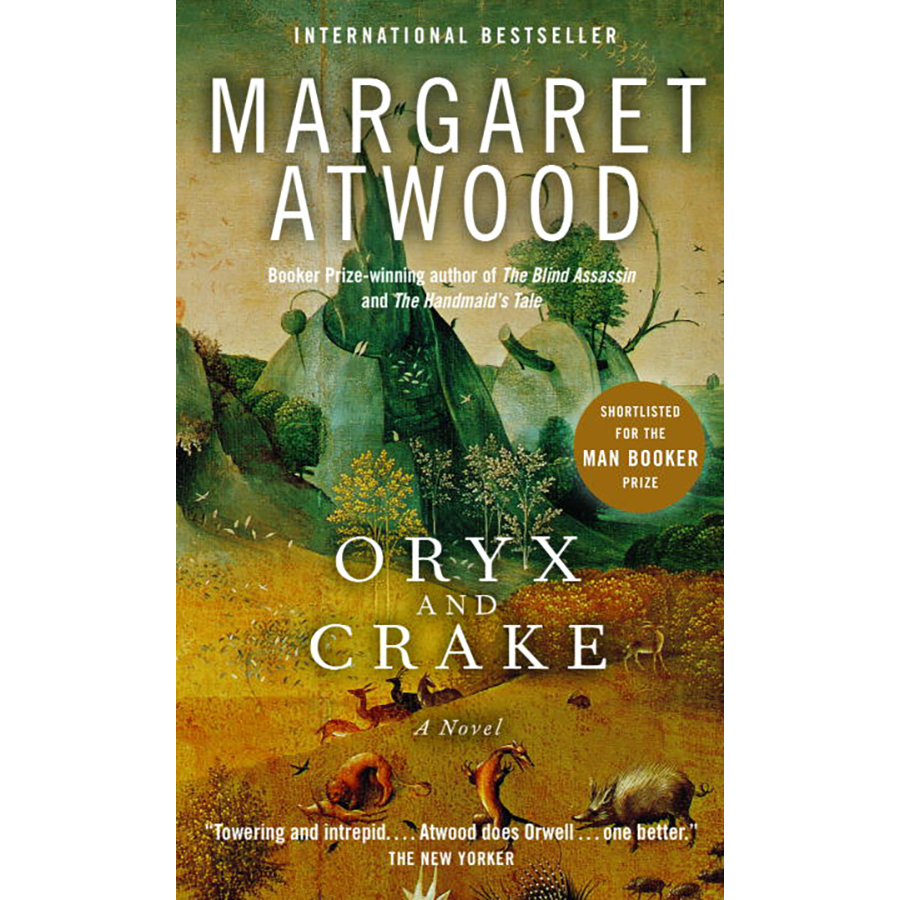
Oryx And Crake, Margaret Atwood
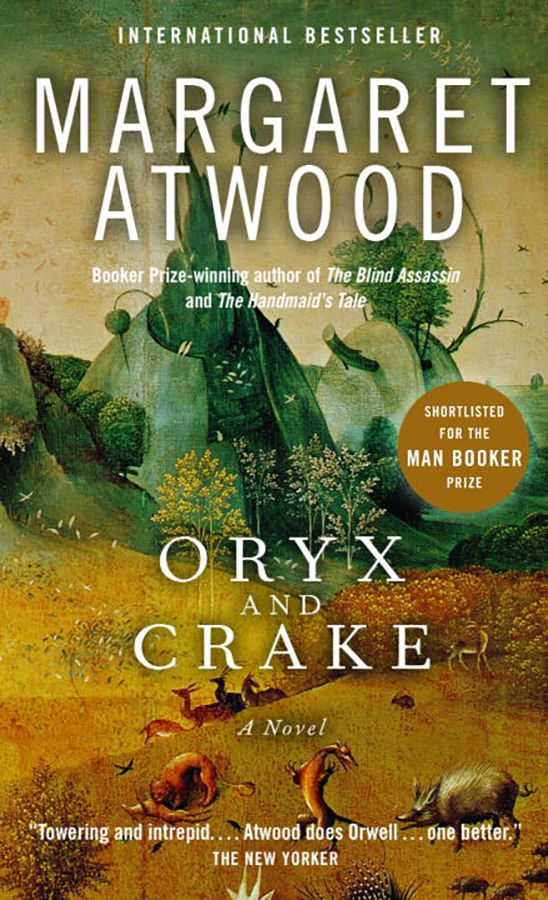
Oryx and Crake follows perhaps the last living human, a man who refers to himself simply as Snowman, through a landscape that is both hyper‑engineered and emptied out. The ruins are recent, the silence manufactured. Everything around him—plants, animals, weather, even the people who aren’t quite people—carries the imprint of someone’s idea of improvement. Snowman moves through it half feral, half scholar, speaking a language that no longer has an audience. His memories arrive in shards: childhood games, corporate compounds, late‑night screens glowing with violence and desire. The past feels curated, the present improvised.
Concepts that once meant something—extinction, progress, genius, love—have been stretched thin by consumer culture, biotech marketing, corporate language, and commodified desire. Snowman keeps talking anyway, narrating to himself, to the ghosts of his lost friends Oryx and Crake, and to genetically modified followers of Crake. He’s trying to hold onto a life that keeps slipping out of reach. The collapse isn’t just ecological or biological; it’s a collapse of meaning.
Snowman’s observations are sharp, dry, and often absurd, especially when he’s forced to explain the world to synthetic beings who have no memory or frame of reference for its mistakes. The horror is clinical, almost elegant in its precision. Beauty appears in odd places: a genetically spliced animal moving through the trees, a fragment of a childhood lesson, a moment of stillness on a beach that shouldn’t exist anymore. The world was undone not by accident but by intention—an apocalypse with a designer’s signature.
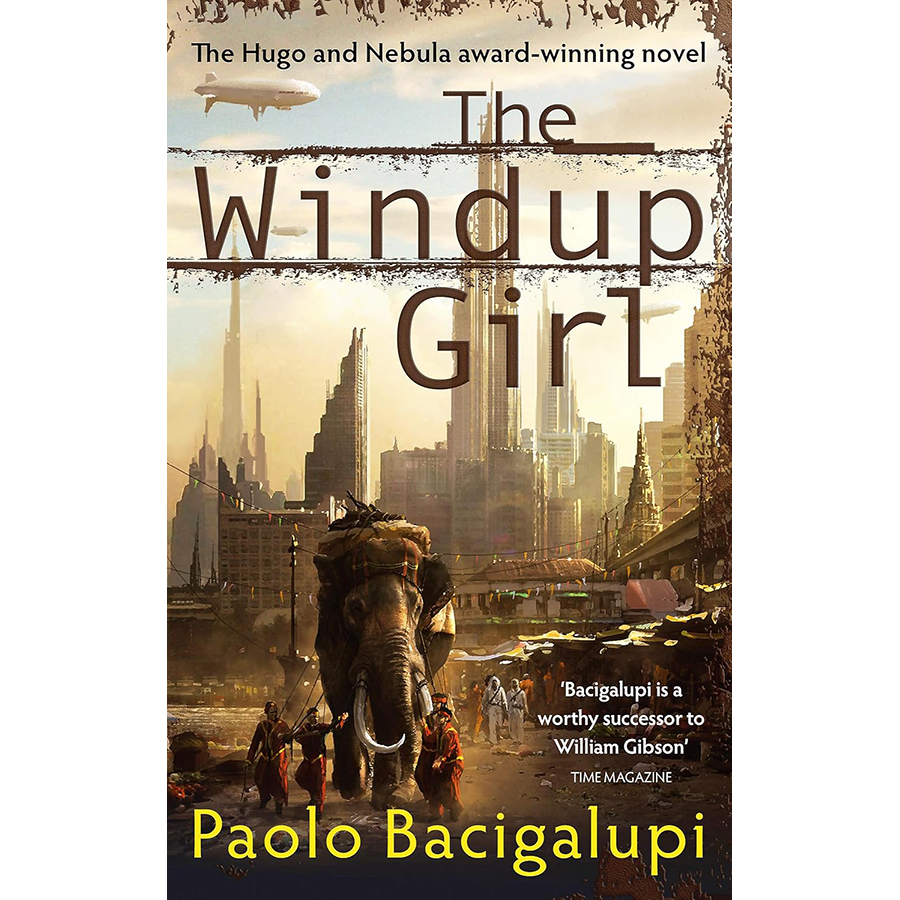
The Windup Girl, Paolo Bacigalupi
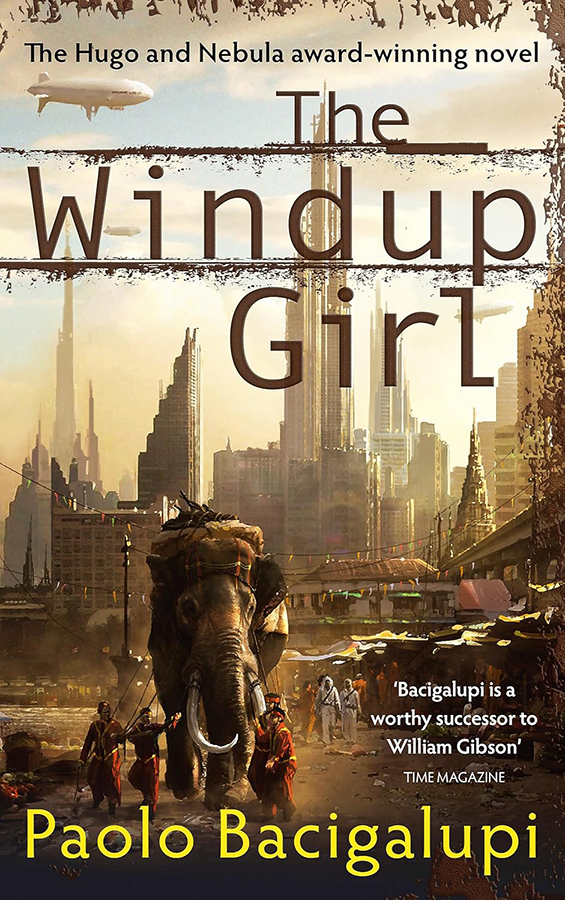
The Windup Girl unfolds in a Bangkok straining under heat, rising water, and the weight of corporate empires that have outgrown nations. Every street carries the imprint of unrestrained biotech conglomerates whose patents reach further than borders. The city is alive in the way a fever is alive—restless, unpredictable, and always on the verge of breaking. Deals are struck in back rooms, enforced by guns, and undone by microbes. The air feels heavy with exhaustion—environmental, political, human.
The world has been engineered in every direction. Crops are spliced, diseases tailored, animals redesigned. Even the air seems manufactured. The ethics of modification aren’t debated; they’re lived. People eat what’s available, fear what’s mutated, and navigate a landscape where scarcity is deliberate. The collapse isn’t sudden. It’s slow, procedural, and profitable. Resource exhaustion has become a business model.
Emiko—the windup girl herself—moves through this world as both creation and commodity. Her body marks her as engineered, her movements betray her, and her existence is treated as property. Prejudice is constant, ritualized, and violent. Yet she carries a kind of internal clarity: fear, anger, longing, and a flicker of something like hope. What happens when someone is told they are not human—and refuses to accept it? Emiko's answer is entirely human: she keeps wanting, keeps suffering, and keeps imagining a future that belongs to her.
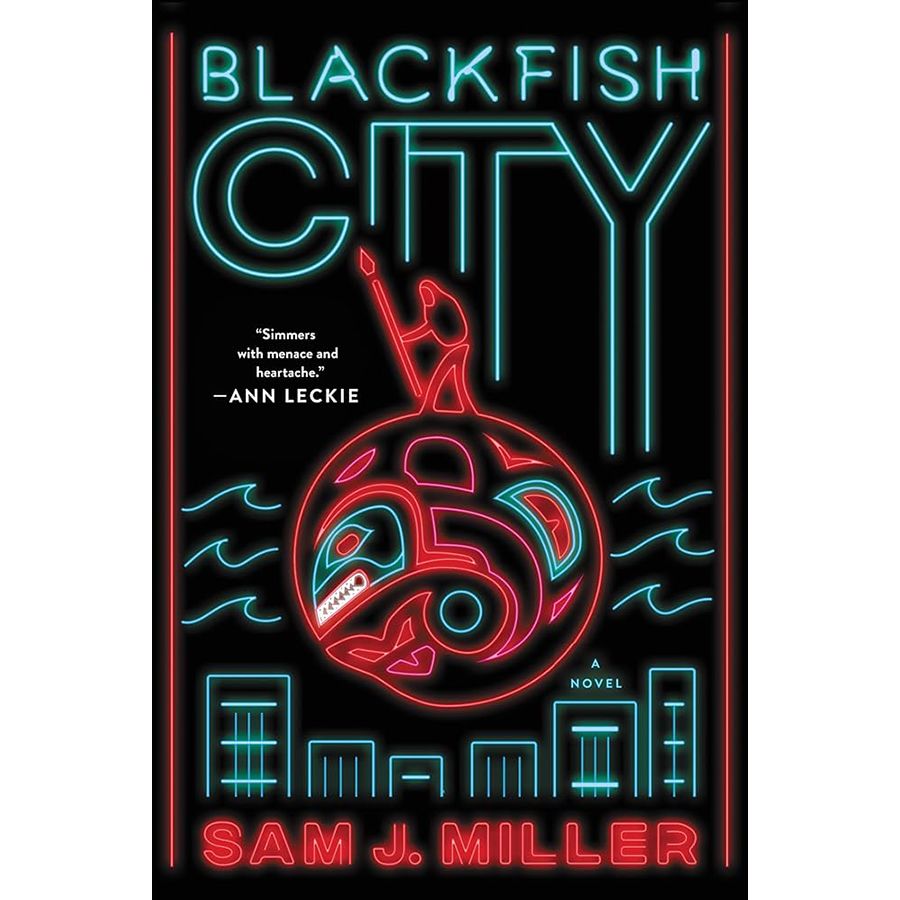
Blackfish City, Sam J. Miller
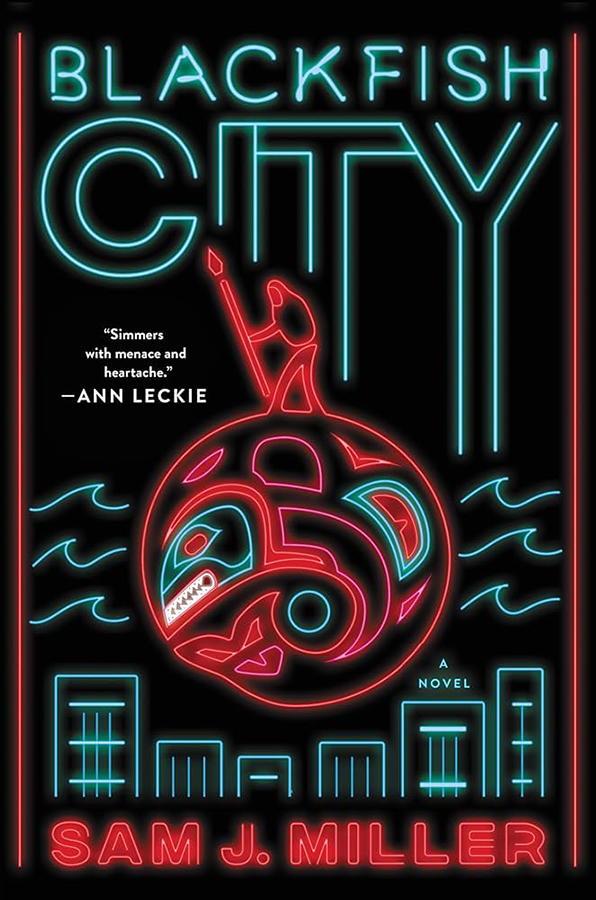
Blackfish City unfolds on Qaanaaq, a floating, mechanically engineered city in the Arctic Circle, assembled from the wreckage of nations drowned, burned, or bought out. The city runs on unchecked capitalism—everything for sale, everything surveilled, everything optimized for profit. Climate collapse has redrawn the map, and the people who arrive here carry the weight of that shift: refugees from vanished homelands, workers trapped in debt cycles, families scattered across continents that no longer exist. All ruled by an elite class of wealthy corporate shareholders and real estate landlords that insulate themselves behind Algorithmic Governance and a parallel government of organized crime lords.
The city feels alive in the way a wound is alive—raw, inflamed, trying to heal around the damage. The damp, freezing, and crowded underbelly reeks of sea muck and the constant threat of violence. Illness moves through the city like a rumor with teeth. “The breaks”—a mysterious, collective memory-sharing disease—is both deadly and a stigma. Amidst the bleakness of the environment, there are profound moments of warmth and unexpected kindness. Stories survive in fragments, passed quietly between people who have learned not to trust official channels.
Into this manufactured and oppressive world, a mythic force of the natural world arrives—the Orcamancer and her bonded polar bear and killer whale. Their arrival draws together people from every layer of Qaanaaq: the privileged and the forgotten, the healthy and the sick, the powerful and the disposable. Each of them carries the imprint of ecological collapse and the global refugee crises that followed, yet each keeps reaching outward, refusing to disappear into the machinery, trying to remain human inside systems that increasingly value efficiency over people. As they become entangled in one another's survival, this newfound family becomes the city’s opposing force—improvised, fragile, and yet more reliable than anything the city’s architects ever built. In a city designed to fragment people and monetize everything, human connection becomes the rarest resource.
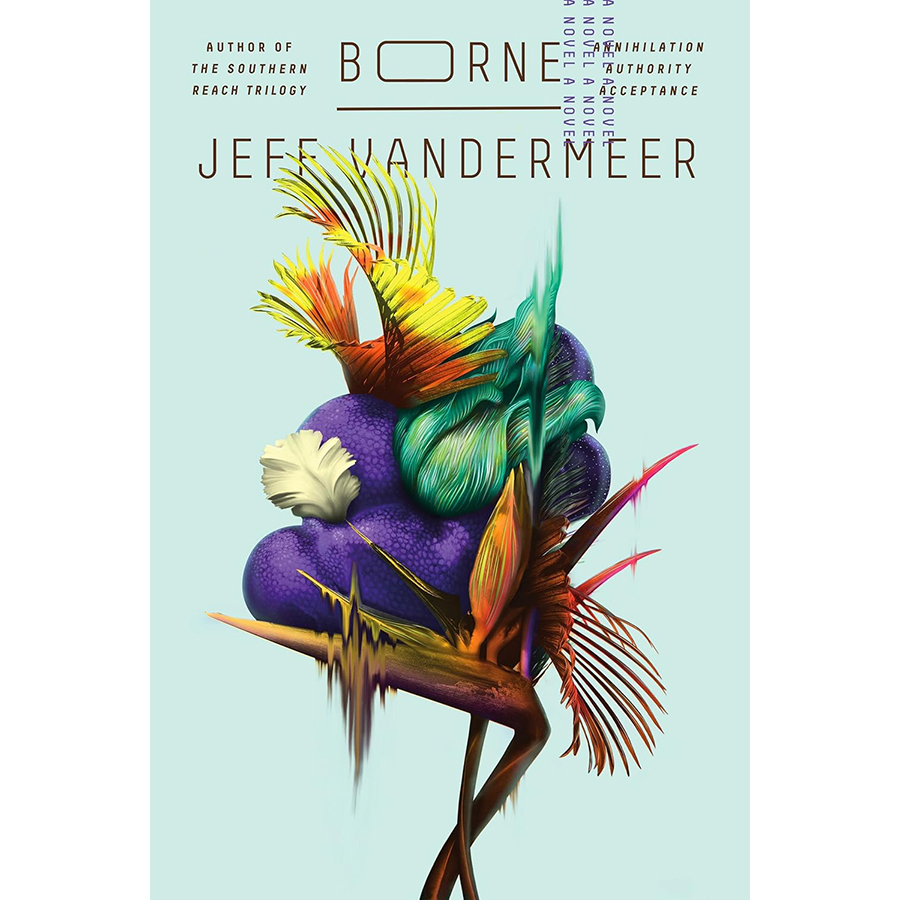
Borne, Jeff VanderMeer
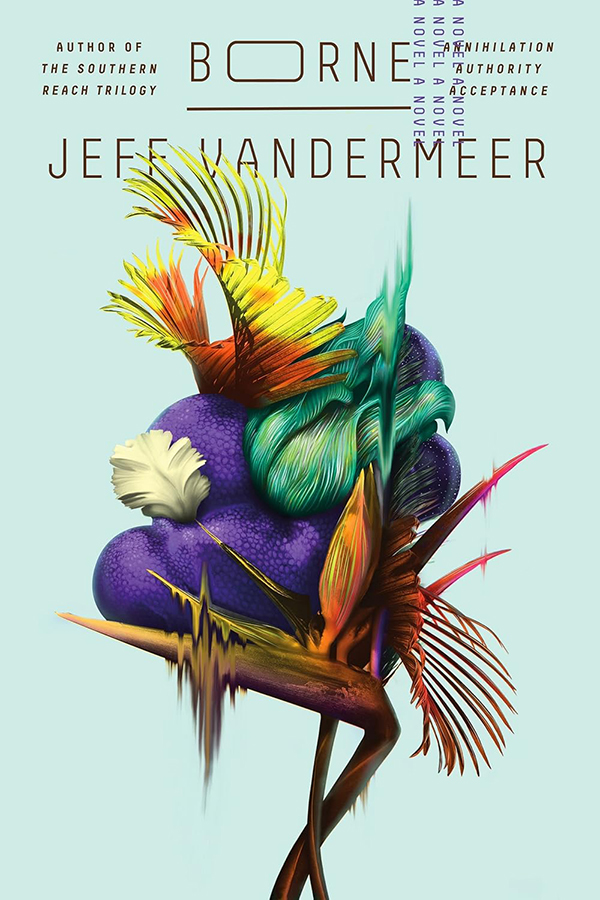
Borne begins with Rachel finding a creature—plant, animal, biotech artifact, something else entirely—caught in the fur of a giant flying bear that patrols a ruined city. She brings it home. Names it. Watches it grow. The city around her is collapsing under the weight of corporate experiments, ecological ruin, and the leftover machinery of a biotech war nobody fully understands anymore.
The world outside their home is a tangle of biotech horrors, scavenger economies, and engineered predators. The giant bear—Mord—casts a literal shadow over everything. Creatures built for violence roam the ruins, yet the connection between Rachel and Borne becomes a shelter inside the chaos. Borne learns quickly, absorbs language, mimics emotion, asks questions that don’t have answers. They talk, argue, learn each other’s rhythms. Rachel tries to guide him, protect him, define him, even as she knows she can’t. The tenderness between them is real, but it’s threaded with fear: fear of what Borne is becoming, fear of what he already is. And even though Rachel’s emotions are human and real, Borne is ultimately undefinable.
The weirdness matters. It’s not decoration. It shapes every interaction, every moment of trust or doubt. Borne’s transformations—physical, emotional, conceptual—are unsettling because they’re intimate. Two figures—one human, one impossible—try to define each other in a world that no longer has stable definitions. What does love look like when the object of that love might be a weapon, a child, a monster, or all three at once?
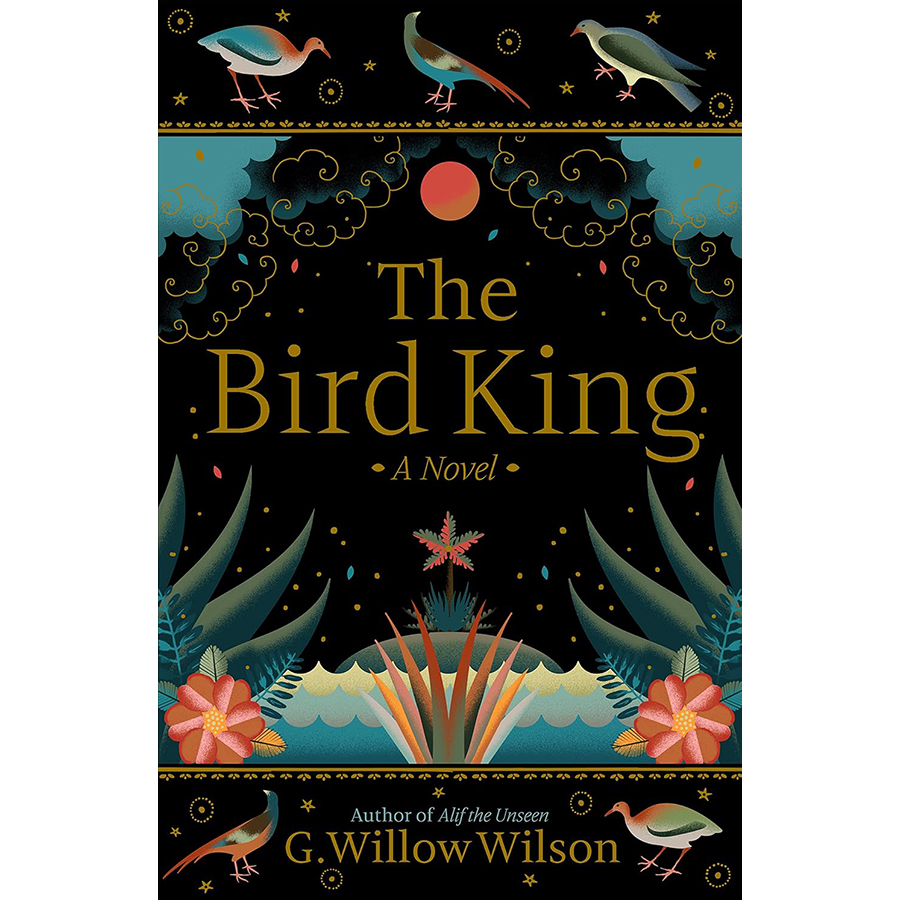
The Bird King, G. Willow Wilson
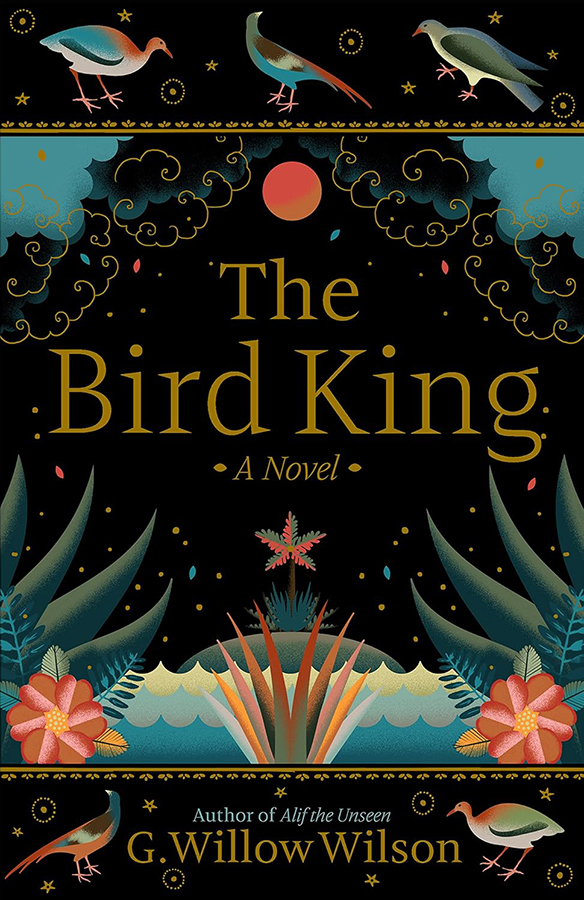
The Bird King is a search for freedom, the importance of imagination, and the power of stories to reshape reality. In the final days of Muslim-ruled Granada, Fatima, a royal concubine, and her friend Hassan, a mapmaker with magical abilities, flee the royal court when their lives are threatened by the falling kingdom and the Spanish Inquisition. Hassan can reshape physical reality by drawing maps of places he’s never seen. His maps open doors, bend distance, and create routes where none should exist. Fatima's loyalty gives Hassan the courage to use his gift to help them escape. At the book’s center is the bond between Fatima and Hassan: loyal, exasperated, tender, and shaped by the knowledge that neither of them fits the roles assigned to them.
Their quest for freedom is a journey through a world where history, myth, stories and faith intertwine. When they encounter Vikram, a philosophical, cynical, shape-shifting djinn, he joins them and becomes their guide and bridge to the supernatural. The world around them is shifting; empires collapsing and alliances fracturing. Yet the emotional gravity stays small and human. Hassan’s wonder, Fatima’s resolve, their arguments, their jokes, their shared history… these moments carry more weight than the armies and inquisitors chasing them.
Their journey gradually becomes about more than escape. Through Vikram's unsettling perspective and the worlds Hassan's maps reveal, both characters begin envisioning lives beyond the identities history has assigned them. Imagination, held fiercely enough, becomes a form of freedom.
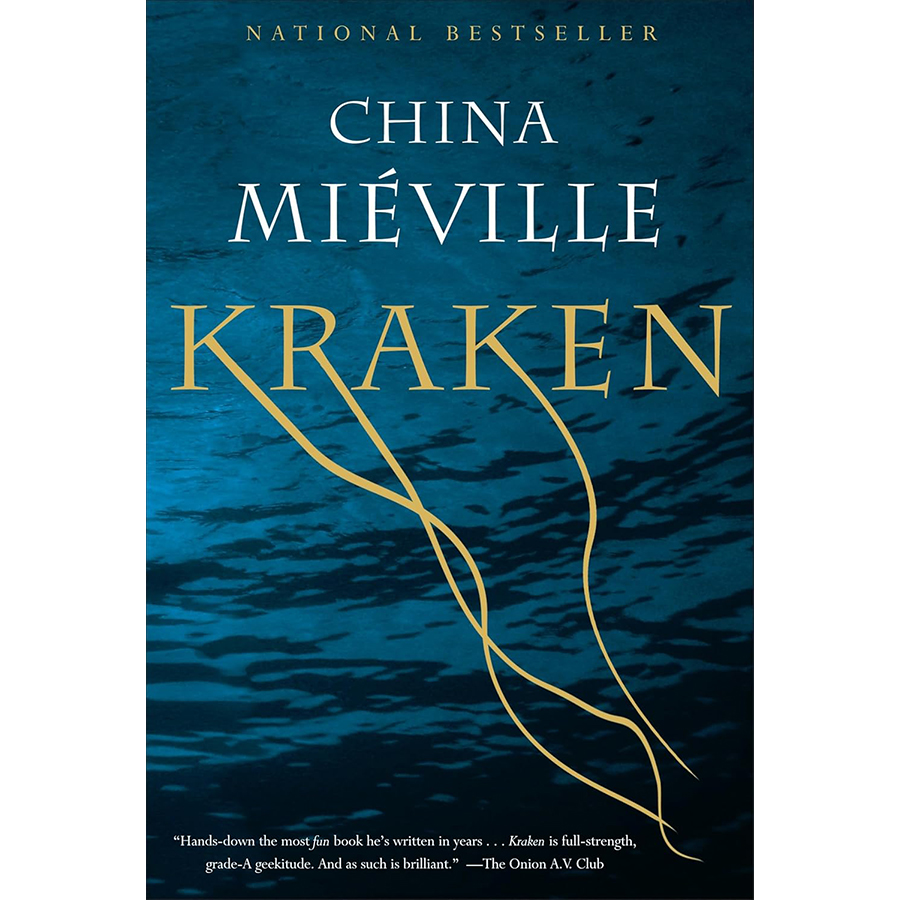
Kraken, China Miéville
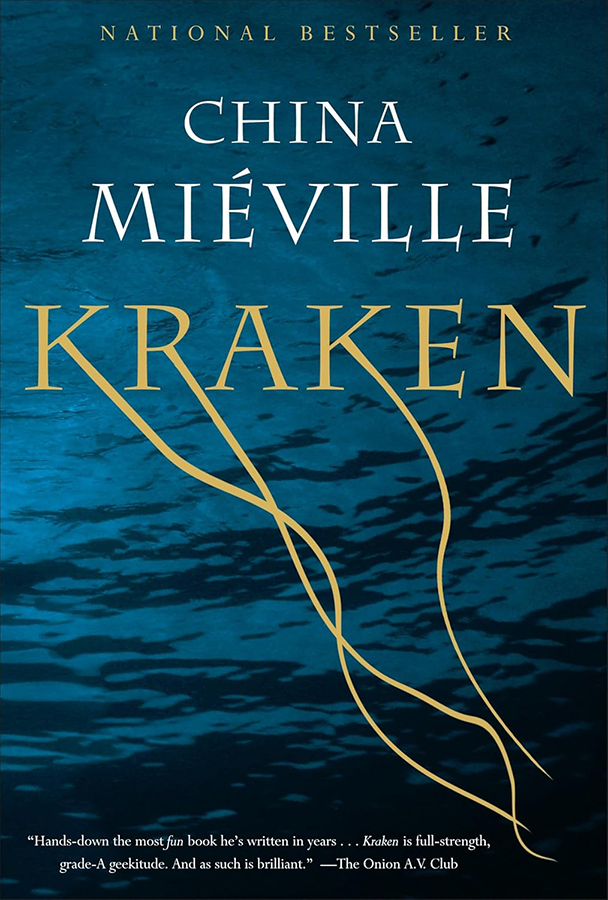
Kraken begins with an impossible theft: a preserved giant squid disappears from a London museum without explanation, pulling the mild-mannered curator Billy Harrow into a hidden city where gods, cults, magicians, criminals, and living myths coexist beneath everyday life. What begins as a mystery quickly unfolds into something stranger: a world where belief shapes reality, forgotten stories refuse to die, and every abandoned corner conceals another impossible truth.
Miéville treats the fantastic not as an interruption of ordinary life but as something that has always existed just beyond its edges. Ancient religions collide with labor unions, rival magical sects wage bureaucratic turf wars, and apocalyptic prophecies compete for attention like political campaigns. The novel revels in excess, yet every bizarre invention feels as though it belongs to the same sprawling ecosystem. The absurdity and wonder accumulate until they begin to feel strangely plausible.
For all its elaborate mythology, Kraken never loses sight of the people caught inside it. Billy remains an ordinary man trying to make sense of a world that continually expands beyond his understanding. His bewilderment becomes the reader's own, grounding the novel's most extravagant ideas in curiosity rather than spectacle. The humor is dry, the imagination inexhaustible, and the pace relentlessly inventive, but beneath it all is an unexpected warmth toward the communities people build around shared beliefs, however strange they may appear.
The novel suggests that myths never disappear; they simply find new places to hide. Belief itself becomes a creative force, reshaping the ordinary into something endlessly surprising.
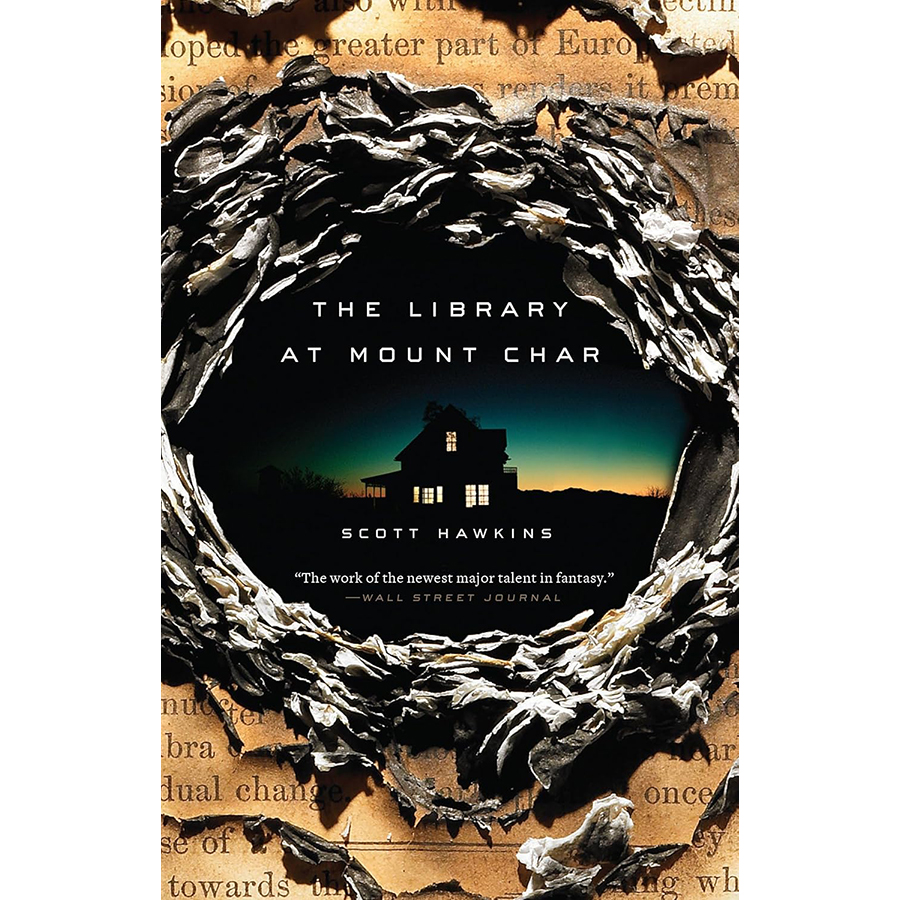
The Library At Mount Char, Scott Hawkins
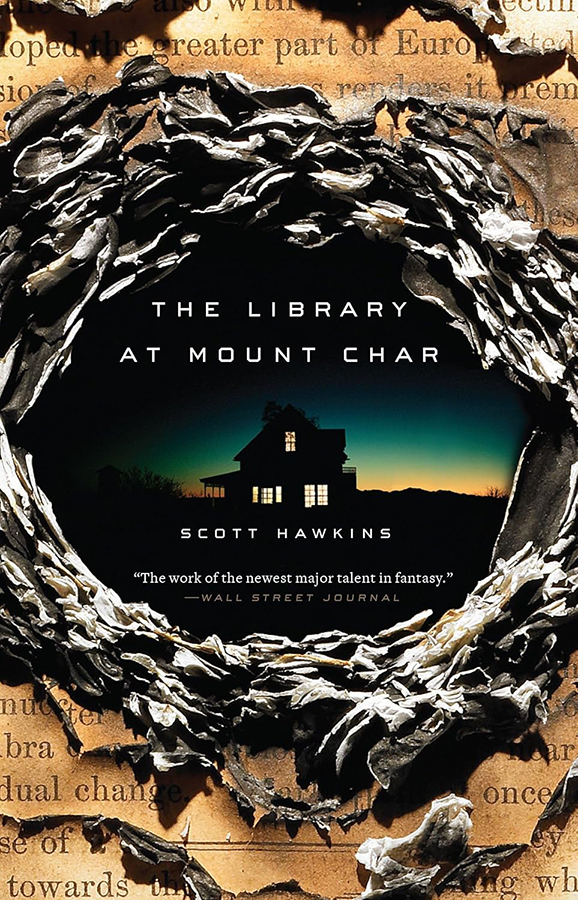
The Library at Mount Char feels like myth cracked open and rewired: a group of twelve children taken in by a being known only as Father, each trained in a single, overwhelming domain of knowledge until their minds and identities bend around the task. At the center of the novel is Carolyn—terrifying, sympathetic, damaged, capable, and surprisingly funny. Carolyn’s domain is languages, but that barely hints at what she’s become: a survivor shaped by a childhood so extreme that the ordinary rules of emotion, morality, and even physics feel flimsy in her hands.
When Father disappears, the world itself begins to warp, and the boundaries that once separated the mundane from the divine collapse with unnerving speed. Reality behaves like a set of rules rewritten on the fly—time stutters, death becomes negotiable, and once-familiar cause and effect buckles. Sometimes helped and sometimes opposed by her monstrously powerful siblings, Carolyn moves through this chaos with a mix of competence, trauma, and deadpan wit that makes her both magnetic and unreadable.
The Library at Mount Char is a blend of deadpan humor, sudden violence, and eerie wonder. And while its humor doesn’t soften the violence, it does sit quietly beside it, amplifying the strangeness of a world where cruelty and comedy share the same breath. For all her damage and brilliance, Carolyn might be the only person capable of shaping what comes next—after our world has become something else entirely. The Library at Mount Char never stops feeling impossible; somehow, it never stops feeling human either.
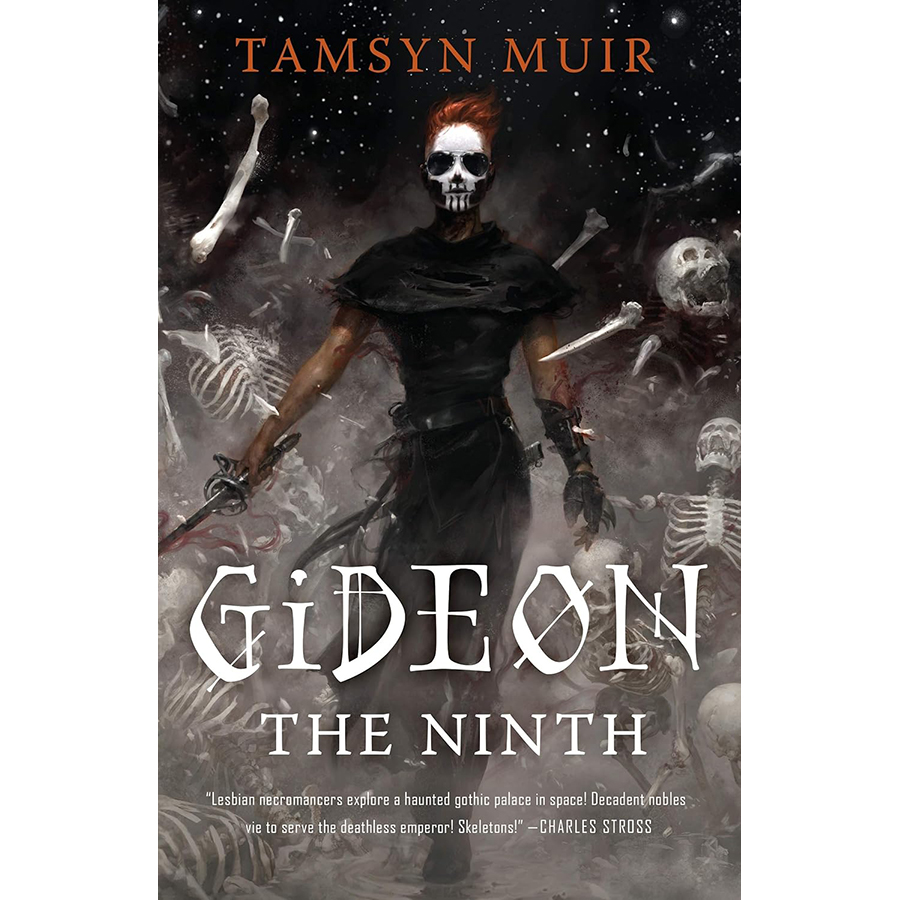
Gideon The Ninth, Tamsyn Muir
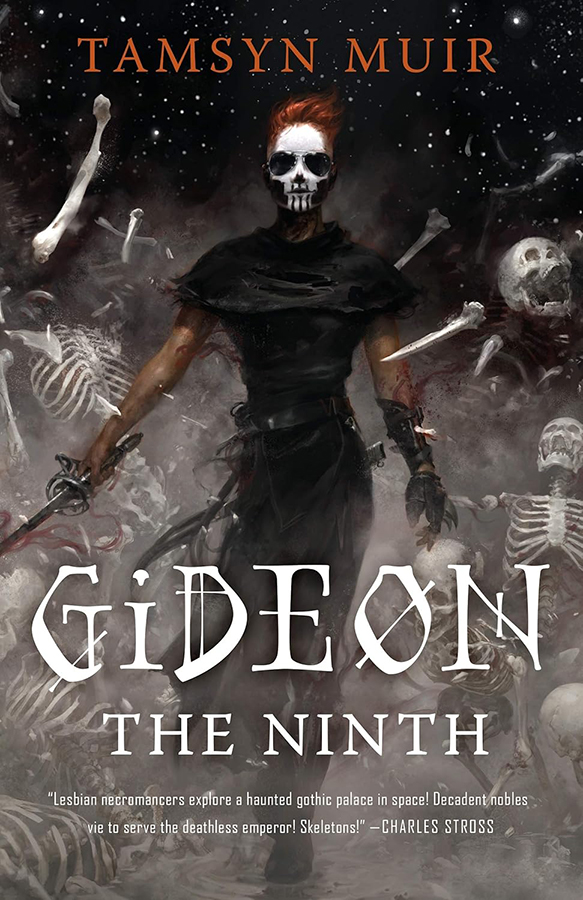
Gideon the Ninth opens so flamboyantly strange it feels like a dare—necromantic houses locked in ancient rivalries, a crumbling empire sustained by death magic, and a swordswoman who wants nothing more than to escape all of it. What begins as an elaborate baroque puzzle gradually reveals deeper emotion beneath all the spectacle. The novel’s world is a fusion of science fiction and haunted-house gothic, a place where technology and sorcery blur, and where loyalty, ambition, and resentment are as potent as any spell.
Muir doesn’t treat necromancy as a gimmick. Bone, memory, and identity are intertwined; the body becomes both weapon and archive. The book’s future is less about sleek innovation than about the elaborate rituals and decaying institutions that hold a dying empire together. It’s a setting that feels simultaneously operatic and claustrophobic. The drama unfolds in the present, yet history hangs over everything.
Tonally, the novel is irreverent, sharp-tongued, and frequently hilarious, yet threaded with genuine grief and longing. Gideon’s swaggering voice cuts through the gloom, but the story around her is steeped in secrecy, sacrifice, and the uneasy intimacy of people bound together by history they can’t escape. The interplay between Gideon and Harrow—antagonistic, interdependent, and emotionally charged—gives the book its heart without ever reducing their relationship to a simple shape. It’s a novel that embraces excess, delights in contradiction, and finds sincerity in the unlikeliest places—even in an empire built on death.
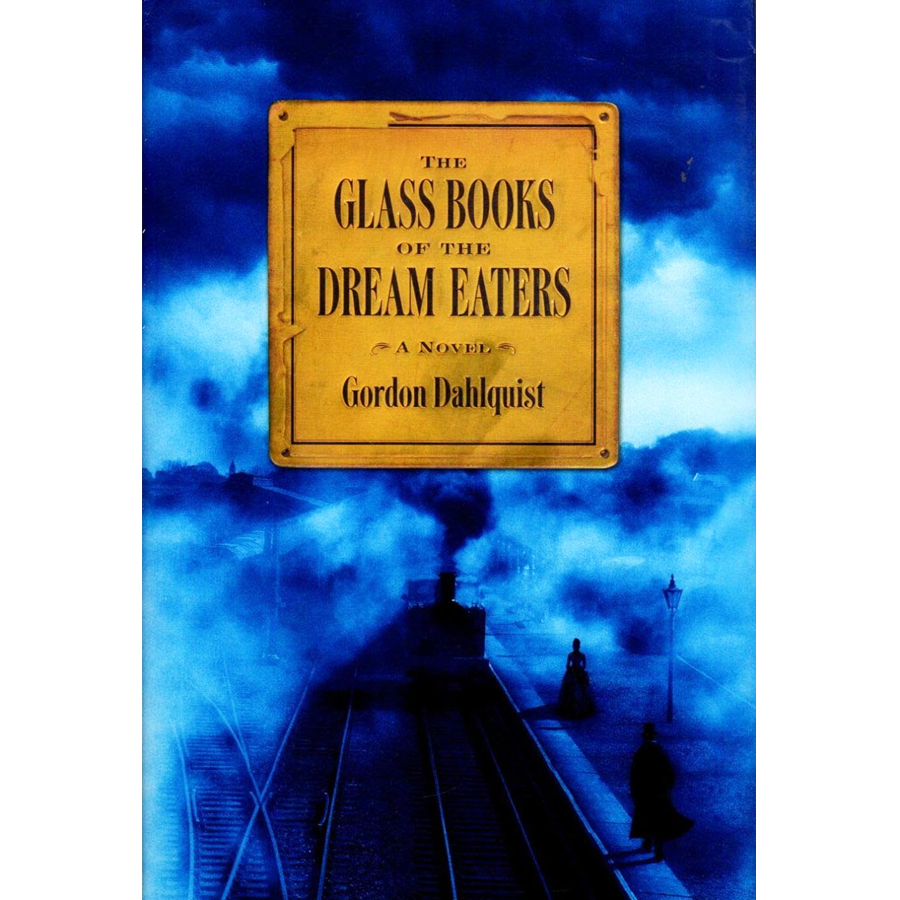
The Glass Books Of The Dream Eaters, Gordon Dahlquist
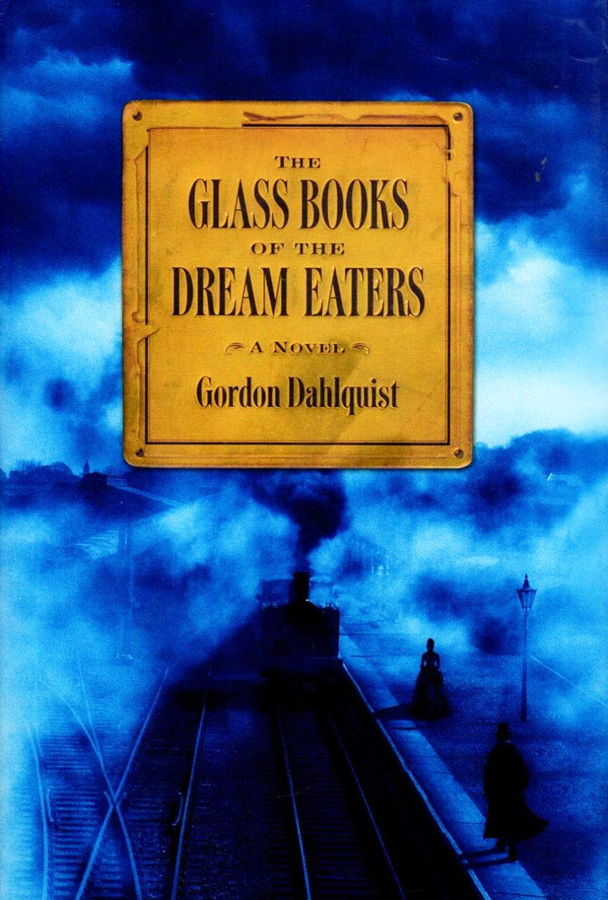
The Glass Books of the Dream Eaters plunges headlong into a world of conspiracies, decadent laboratories, and clockwork intrigue. Its premise is pure theatrical excess: a secret society harvesting human experience, a sprawling empire of espionage and seduction, and three unlikely heroes thrown together by accident and stubbornness. The novel moves with the energy of a fevered serial, each chapter escalating the danger, the glamour, and the sheer audacity of its inventions.
The “blue glass” of the Glass Books is an alchemical technology that captures memory, desire, and sensation. Dahlquist treats this not as a scientific breakthrough, but as a kind of currency—a substance that reveals how power, pleasure, and identity can be manipulated in equal measure. The world around it is lushly imagined, part Victorian melodrama, part pulp fantasia, a place where every corridor seems to hide a trapdoor or a masked adversary.
The novel is playful, breathless, and unabashedly operatic, yet grounded by the determination of its central trio: a betrayed heiress, a disgraced soldier, and a resourceful doctor who refuses to be underestimated. Their alliance gives the story its warmth, cutting through the ornate dirigibles and danger with flashes of loyalty, wit, and resilience. Everything is costumes, secret societies, hidden identities, elaborate rituals, steampunk technology, and theatrical conspiracies. Few novels commit so completely to their own elaborate absurdity.
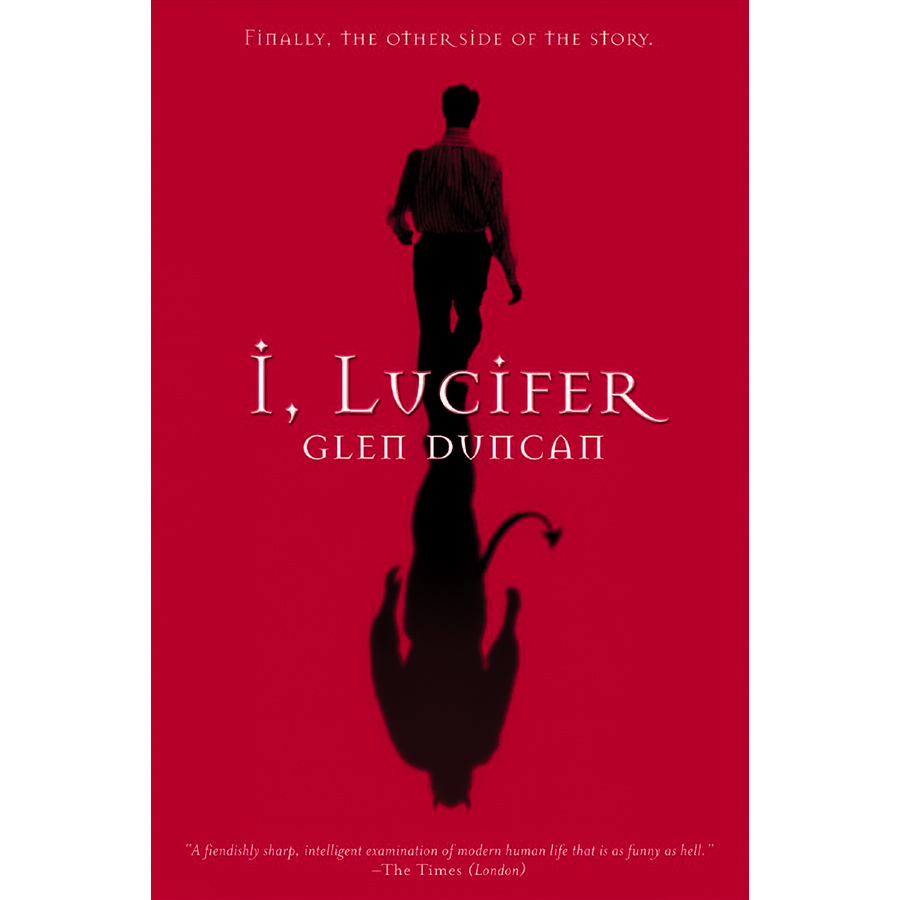
I, Lucifer, Glen Duncan
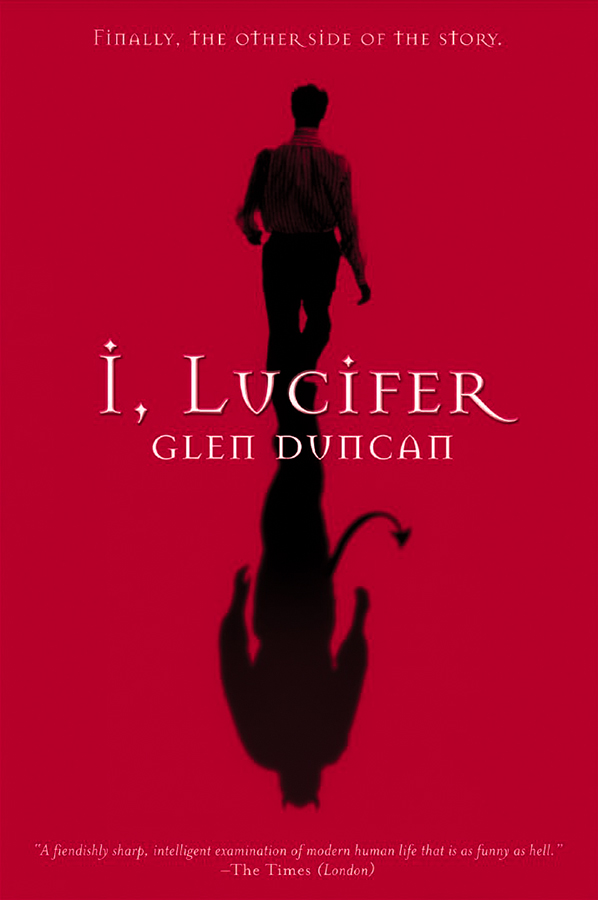
I, Lucifer begins with a premise that feels both mischievous and strangely inevitable: the Devil is offered a temporary return to Earth, given a human body, and invited to make his case. What follows is a first‑person account that blends cosmic arrogance with unexpected vulnerability, a voice that veers from sardonic wit to something closer to confession. The novel’s speculative frame is simple, but its implications are expansive—an immortal intelligence is forced to inhabit the limits, pleasures, indignities, and bewilderment of a human life.
Lucifer’s narration becomes a lens through which modern existence looks at once absurd, intoxicating, and painfully fragile. The book’s theology is less about doctrine than about psychology. The fantastical premise sharpens the everyday rather than overshadowing it.
The story moves with a quick, cutting rhythm. It’s funny, profane, and theatrically self‑aware, yet threaded with a melancholy that grows more pronounced as Lucifer confronts the limits of his borrowed body and the remnants of his own former radiance. The tension between his swagger and his loneliness gives the book its emotional gravity. Lucifer talks of humanity, but he's also talking about himself—and he often doesn't know the difference. This is Lucifer; the vain, lonely, funny, seductive, self-sabotaging narrator who keeps revealing more than he intends.
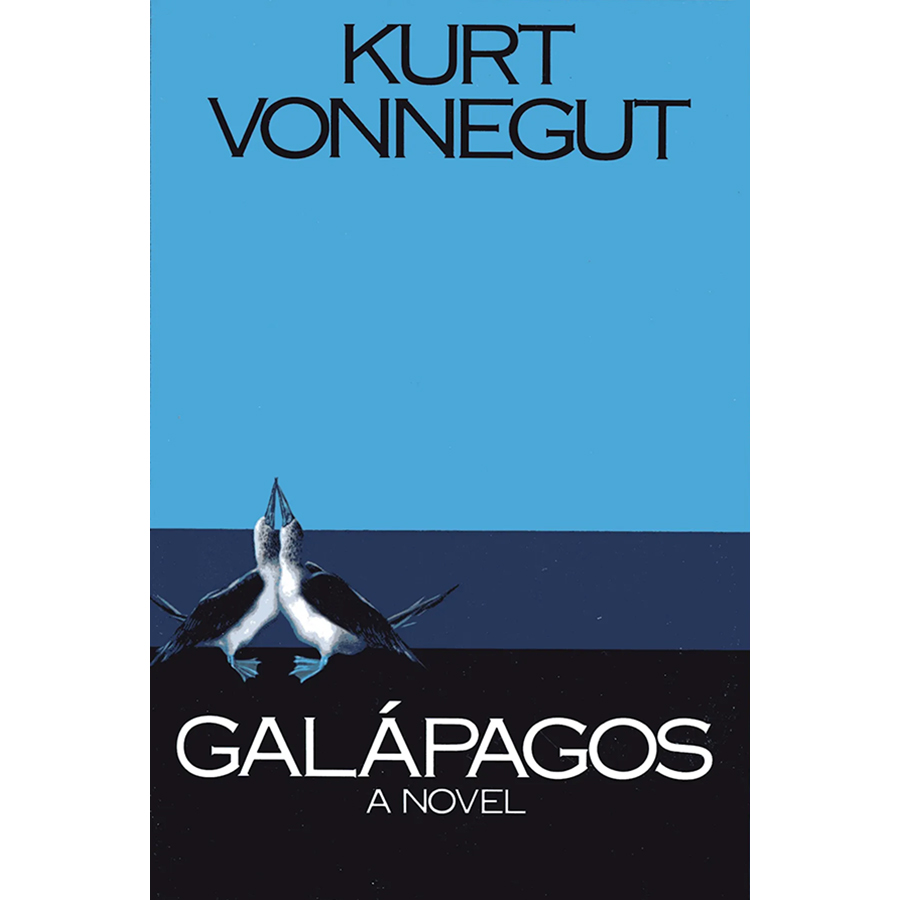
Galápagos , Kurt Vonnegut
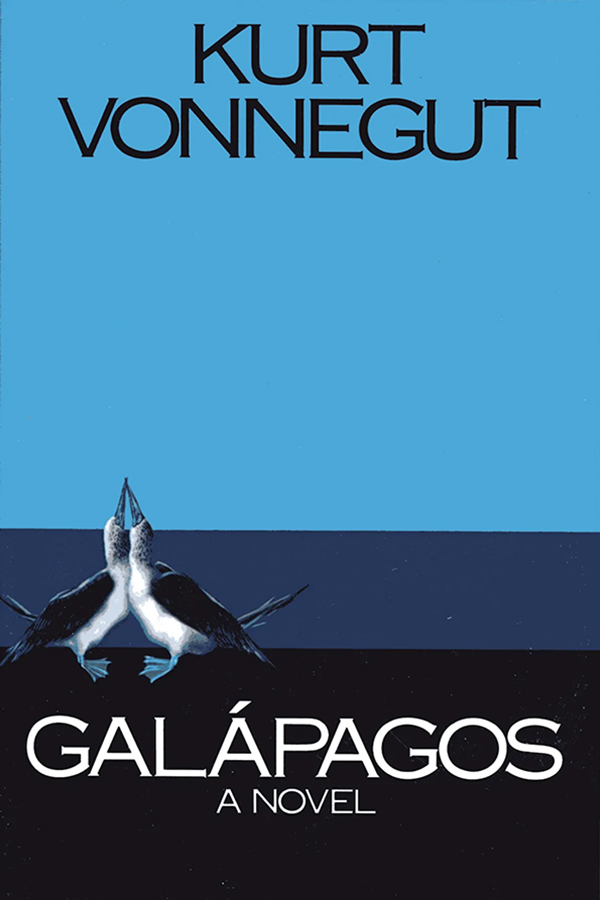
Galápagos begins with an absurd premise that gradually becomes unsettlingly profound: humanity, after a cascading global collapse, accidentally bottlenecks itself into a tiny group of survivors stranded on the Galápagos Islands. Over the next million years, these survivors become the ancestors of a radically transformed human species — sleek, simple, seal-like creatures adapted for survival rather than intellect. Narrated by a ghost looking backward across evolutionary time, the novel treats the entire history of modern civilization as a tragicomic mistake caused by what Vonnegut repeatedly calls humanity’s “big brains.”
It’s not flashy technology or elaborate worldbuilding, but rather the scale and boldness of its thought experiment… evolution itself is the central speculative mechanism. The book asks whether human intelligence — the very thing civilization celebrates — may actually be the source of greed, war, anxiety, ecological destruction, and mass suffering. Its invented future exposes uncomfortable truths about the present. The environmental collapse, economic panic, and institutional absurdity of the novel feel even sharper now than they did in 1985. It’s the kind of book that can completely change tone depending on when you read it in life. And even though its central idea sounds cynical at first — “human intelligence ruined everything” — the book itself never feels cruel. It feels mournful, playful, and strangely hopeful at the same time.
Galápagos moves between satire and genuine tenderness with deceptive ease. One page contains deadpan comedy about finance or bureaucracy; the next quietly confronts extinction, loneliness, or the accidental fragility of civilization. Beneath the irony is a surprisingly compassionate question: what if becoming less “advanced” might actually make humanity happier and kinder?